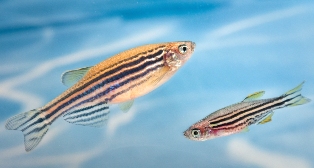
HONG KONG: A mathematical model developed by Brown University researchers is shedding new light on how zebrafish get their iconic stripes. The model helps to demonstrate how two dynamic processes—the movement of pigment cells across the skin, and the birth and death of cells as the fish grows—combine to keep zebrafish stripes in line.
The model is described in the Journal of the Royal Society Interface.
Zebrafish have become quite a popular model organism for biology researchers over the past few decades. The small freshwater fish begin life as transparent embryos and develop in just a few months to full size, giving scientists the chance to watch their development in detail. The emergence of their namesake stripes of dark blue and bright yellow has been the subject of much research. The stripes have been shown to be the result of interplay between three types of pigment cells: black melanophores, yellow xanthophores, and silvery iridophores.


“The stripe pattern forms dynamically as the fish develops,” said Alexandria Volkening, a graduate student and Brown’s Division of Applied Mathematics and the lead author on the new paper. “It’s not like these pigment cells are filling out some kind of prepattern that’s already there. It’s the interactions of the cells over time that causes the patterns to form. We wanted to build a model that simulates this based as much as possible on what’s known about the biology.”