Customs Today
  • Home
  • Islamabad
  • Karachi
  • Lahore
  • National
  • Transfers and Postings
  • Chambers & Associations
  • Business
No Result
View All Result
Customs Today
  • Home
  • Islamabad
  • Karachi
  • Lahore
  • National
  • Transfers and Postings
  • Chambers & Associations
  • Business
No Result
View All Result
Customs Today
No Result
View All Result
Home Science & Technology Science

How zero gravity affects the brain of astronauts?

byCustoms Today Report
12/10/2015
in Science, Science & Technology
Share on FacebookShare on Twitter

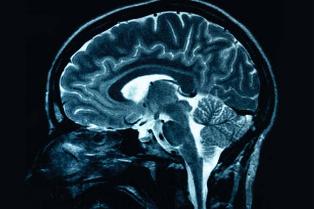
WASHINGTON: NASA-funded researchers are studying brain structures and functions of the astronauts aboard the International Space Station (ISS) to understand how brain changes in space and ways to deal with those changes.

Astronauts have experienced problems with balance and perceptual illusions in microgravity.

You might also like

Tesla driverless system to use updated radar technology

12/09/2016

Apple to develop its own self-driving technology

10/09/2016

The NASA-funded study is examining changes in both brain structure and function and determining how long it takes to recover after returning from space.
Researchers are using both behavioural assessments and brain imaging.

For the study, astronauts complete timed obstacle courses and tests of their spatial memory, or the ability to mentally picture and manipulate a three-dimensional shape, before and after spaceflight.

The spatial memory test is also performed aboard the station, along with sensory motor adaptation tests and computerised exercises requiring them to move and think simultaneously.

Astronauts are tested shortly after arriving aboard the station, mid-way through and near the end of a six-month flight.

Structural and functional magnetic resonance imaging (MRI) scans of the brain are done pre-flight and post-flight.

“We are looking at the volume of different structures in the brain and whether they change in size or shape during spaceflight,” said principal investigator Rachael D Seidler, director of the University of Michigan’s Neuromotor Behaviour Laboratory.

According to Seidler, both the behavioural assessment and brain imaging are important to help identify the relationship between physical changes in the brain and those in behaviour.


Related Stories

Tesla driverless system to use updated radar technology

byCT Report
12/09/2016

WASHINGTON: Electric carmaker Tesla announced Sunday it was upgrading its Autopilot software to use more advanced radar technology. In a...

Apple to develop its own self-driving technology

byCT Report
10/09/2016

SAN FRANCISCO: Apple may not become an automaker, but it still wants to develop its own self-driving technology. The iPhone-maker's...

NASA spots slowest known magnetar

byCT Report
10/09/2016

WASHINGTON: Astronomers have found evidence of a magnetar - magnetised neutron star - that spins much slower than the slowest...

‘YouTubers’ outshining old-school television

byCT Report
09/08/2016

SAN FRANCISCO: A media revolution is taking place, and most people over 35 years of age aren’t tuned in. Millennial...

Next Post

Number of WCCI memberships to be increased to 500: President

  • Terms and Conditions
  • Disclaimer

© 2011 Customs Today -World's first newspaper on customs. Customs Today.

No Result
View All Result
  • Transfers and Postings
  • Latest News
  • Karachi
  • Islamabad
  • Lahore
  • National
  • Chambers & Associations
  • Business
  • About Us

© 2011 Customs Today -World's first newspaper on customs. Customs Today.