Customs Today
  • Home
  • Islamabad
  • Karachi
  • Lahore
  • National
  • Transfers and Postings
  • Chambers & Associations
  • Business
No Result
View All Result
Customs Today
  • Home
  • Islamabad
  • Karachi
  • Lahore
  • National
  • Transfers and Postings
  • Chambers & Associations
  • Business
No Result
View All Result
Customs Today
No Result
View All Result
Home Science & Technology Science

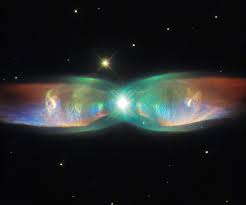
HST image show off remarkable complexity of Twin Jet Nebula

byCustoms Today Report
27/08/2015
in Science, Science & Technology
Share on FacebookShare on Twitter

WASHINGTON: The shimmering colours visible in this NASA/ESA Hubble Space Telescope image show off the remarkable complexity of the Twin Jet Nebula. The new image highlights the nebula’s shells and its knots of expanding gas in striking detail. Two iridescent lobes of material stretch outwards from a central star system. Within these lobes two huge jets of gas are streaming from the star system at speeds in excess of one million kilometres per hour.

The cosmic butterfly pictured in this NASA/ESA Hubble Space Telescope image goes by many names. It is called the Twin Jet Nebula as well as answering to the slightly less poetic name of PN M2-9.


You might also like

Tesla driverless system to use updated radar technology

12/09/2016

Apple to develop its own self-driving technology

10/09/2016

The M in this name refers to Rudolph Minkowski, a German-American astronomer who discovered the nebula in 1947. The PN, meanwhile, refers to the fact that M2-9 is a planetary nebula. The glowing and expanding shells of gas clearly visible in this image represent the final stages of life for an old star of low to intermediate mass. The star has not only ejected its outer layers, but the exposed remnant core is now illuminating these layers – resulting in a spectacular light show like the one seen here. However, the Twin Jet Nebula is not just any planetary nebula, it is a bipolar nebula.

Ordinary planetary nebulae have one star at their centre, bipolar nebulae have two, in a binary star system. Astronomers have found that the two stars in this pair each have around the same mass as the Sun, ranging from 0.6 to 1.0 solar masses for the smaller star, and from 1.0 to 1.4 solar masses for its larger companion. The larger star is approaching the end of its days and has already ejected its outer layers of gas into space, whereas its partner is further evolved, and is a small white dwarf.


Related Stories

Tesla driverless system to use updated radar technology

byCT Report
12/09/2016

WASHINGTON: Electric carmaker Tesla announced Sunday it was upgrading its Autopilot software to use more advanced radar technology. In a...

Apple to develop its own self-driving technology

byCT Report
10/09/2016

SAN FRANCISCO: Apple may not become an automaker, but it still wants to develop its own self-driving technology. The iPhone-maker's...

NASA spots slowest known magnetar

byCT Report
10/09/2016

WASHINGTON: Astronomers have found evidence of a magnetar - magnetised neutron star - that spins much slower than the slowest...

‘YouTubers’ outshining old-school television

byCT Report
09/08/2016

SAN FRANCISCO: A media revolution is taking place, and most people over 35 years of age aren’t tuned in. Millennial...

Next Post

Switzerland's exports fall 4.9% in July

  • Terms and Conditions
  • Disclaimer

© 2011 Customs Today -World's first newspaper on customs. Customs Today.

No Result
View All Result
  • Transfers and Postings
  • Latest News
  • Karachi
  • Islamabad
  • Lahore
  • National
  • Chambers & Associations
  • Business
  • About Us

© 2011 Customs Today -World's first newspaper on customs. Customs Today.