You might also like


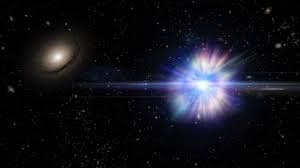
HONG KONG: The Hubble Space Telescope (HST) has been used to image three rare supernovae that were torn from their host galaxies long ago. The lonesome dying stars shine roughly one billion light years away from our own home planet, and hundreds of light years away from their nearest stellar companions.
These Type 1a supernovae result when a white dwarf star collects gas and dust that falls onto the surface. When the material reaches a critical mass, it erupts in a massive explosion that can temporarily outshine a galaxy. In a typical family of stars like the Milky Way, such events happen about once every 100 years.
Any planets that once orbited the stars before they exploded in their death throes would have experienced night skies with few visible stars.
A fourth supernova seen by Hubble likely had plenty of neighbors — astronomers believe it may be the first such even seen within a globular cluster. These collections of stars feature thousands of stellar bodies huddled in close quarters — resembling a dandelion gone to seed. Although stars in these groupings are found close together, there aren’t many members in each globular cluster — fewer than 10,000.