You might also like


HARROW: The NASA/ESA Hubble Space Telescope has captured a stunning new image of the Lagoon Nebula, one of the finest and brightest star-forming regions known our Milky Way Galaxy.
The central part of the Lagoon Nebula has two main structures of gas and dust connected by wispy twisters, which are visible in the middle third of this image.
Analogous to the phenomena of tornadoes on Earth, the large difference in temperature between the hot surface and cold interior of the clouds, combined with the pressure of starlight, may produce strong horizontal “windshear” to twist the clouds into their tornado-like appearance. The star is also responsible for being the main source of ionizing radiation for this particular part of the Lagoon Nebula.
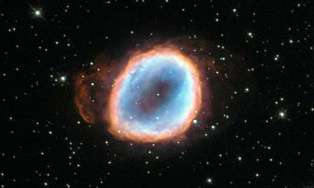
Planetary nebulas have nothing to do with planets, despite their misleading name. While the star’s demise may be slow by our standards, in this case lasting tens of thousands of years, the process is a mere blink of an eye in the cosmological timescale. The European Space Agency explained the reason that a gas cloud ejected from the star has left its core exposed. The interaction of this radiation with the surrounding gas releases the lights outwards, as captured by the Hubble, leading to the star’s inevitable death.
Planetary nebulae general last about 10,000 years, The ESA adds, before the central star cools and turns into a white dwarf, fading from view.