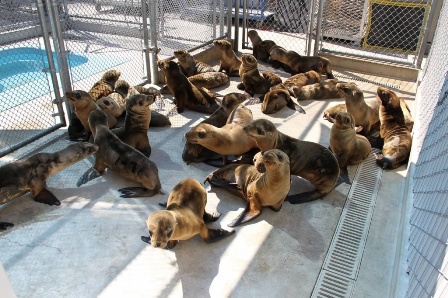
BRENT: The number of sea lion pups found stranded along the California coast has gone up precipitously recently, causing concern among marine mammal experts in the region that have been picking up the pieces.
With this time of year a regular nursing period for sea lion mothers and their pups, experts have begun speculating what could be causing the disruption. More than 250 undernourished and abandoned sea lion pups have been found so far and rescued by conservation volunteers from San Francisco to San Diego, more than twice the number of rescued pups during a 2013 crisis of a similar nature.
You might also like


The nonprofit Marine Mammal Center, based in Sausalito, says it’s responded to almost 120 calls regarding stranded pups on the coast over the first six weeks of the year. Meanwhile, the Center says that it wasn’t until April of 2014 before it had treated even 100 sea pups. MMC director of veterinary medicine Shawn Johnson said that this might be the highest number of strandings yet, but it certainly hasn’t been an isolated event; Johnson remarked that this was the third year in a row that sea lion mothers have seemed to be disappearing like this, and that if this trend continues the strength of the sea lion population could have some long-term effects as a result.
Peter Wallerstein, the director of Marine Animal Rescue, echoed the Marine Mammal Center’s concerns. Wallerstein said that he had never seen such a high number of stranded pups in his three-decade long career. Meanwhile, NOAA Fisheries California’s stranding network coordinator Justin Viezbicke said that the excessively high number of stranded sea lion pups was increasingly puzzling, raising concerns that the sea lion population has reached its capacity in the environment of the West Coast.
NOAA has been taking a close look at recent die-offs and strandings to see if they have a correlation with changing ocean conditions or any other seaborne issues. So far, disease has been ruled out. A team of scientists from the US agency are monitoring the conditions of female sea lions on the Channel Islands – their usual breeding grounds – to uncover what’s happening to their pups.