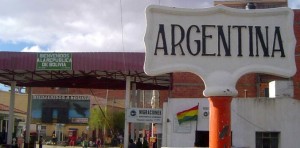
BUENOS AIRES: At border crossings between Argentina and Bolivia, one can find just about everything: toys, shoes, and clothing on one side, or noodles, soybeans, dairy products, and wheat on the other. Small-scale smuggling between the two South American countries is the rule rather than the exception.
Amid vendors offering various fruit juices or traditional meals made with chicken or llama, hundreds of Argentineans and Bolivians cross the border everyday to buy goods at local street markets.


Argentina shares a border with Uruguay, Brasil, Paraguay, Chile, and Bolivia. To get to Bolivia, Argentineans have three international crossing points: La Quiaca passage in Villazón; the Aguas Blancas bridge, which connects Orán on the Argentinean side with Bermejo on the Bolivian side; and the Salvador Mazza bridge, which connects Araguay with Yacuiba.
It’s rare to find checkpoints or any sort of control. In 2014, the Argentinean TV show Journalism for Everyone reported that electronic scanners are turned off most of the time, and border officers are nowhere to be found. “If this is happening at legal crossing points, what’s going on at the illegal ones?” the journalists asked.