Customs Today
  • Home
  • Islamabad
  • Karachi
  • Lahore
  • National
  • Transfers and Postings
  • Chambers & Associations
  • Business
No Result
View All Result
Customs Today
  • Home
  • Islamabad
  • Karachi
  • Lahore
  • National
  • Transfers and Postings
  • Chambers & Associations
  • Business
No Result
View All Result
Customs Today
No Result
View All Result
Home Science & Technology Science

Increase level of CO2 to destroy sharks’ hunting ability

bySana Anwar
16/11/2015
in Science, Science & Technology
Share on FacebookShare on Twitter

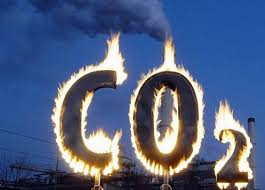
SYDNEY: With the increase in level of carbon dioxide (CO2) and warmer oceans, the hunting ability and growth of sharks will be dramatically impacted by the end of the century, a study warns.

Warmer waters and ocean acidification will have major detrimental effects on sharks’ ability to meet their energy demands, the study said.


You might also like

Tesla driverless system to use updated radar technology

12/09/2016

Apple to develop its own self-driving technology

10/09/2016

“In warmer water, sharks are hungrier but with increased CO2 they won’t be able to find their food,” said study leader Ivan Nagelkerken from Australian Research Council.

“With a reduced ability to hunt, sharks will no longer be able to exert the same top-down control over the marine food webs, which is essential for maintaining healthy ocean ecosystems,” Nagelkerken noted.

The laboratory experiments, studying Port Jackson sharks and including large tanks with natural habitat and prey, found embryonic development was faster under elevated temperatures.

But the combination of warmer water and high CO2 increased the sharks’ energy requirement, reduced metabolic efficiency and removed their ability to locate food through olfaction (smelling). These effects led to marked reductions in growth rates of sharks.

The results of the study provide strong support for the call to prevent global overfishing of sharks.

“One-third of shark and ray species are already threatened worldwide because of overfishing,” professor Sean Connell from University of Adelaide said.

“Climate change and ocean acidification are going to add another layer of stress and accelerate those extinction rates,” Connell pointed out.


Related Stories

Tesla driverless system to use updated radar technology

byCT Report
12/09/2016

WASHINGTON: Electric carmaker Tesla announced Sunday it was upgrading its Autopilot software to use more advanced radar technology. In a...

Apple to develop its own self-driving technology

byCT Report
10/09/2016

SAN FRANCISCO: Apple may not become an automaker, but it still wants to develop its own self-driving technology. The iPhone-maker's...

NASA spots slowest known magnetar

byCT Report
10/09/2016

WASHINGTON: Astronomers have found evidence of a magnetar - magnetised neutron star - that spins much slower than the slowest...

‘YouTubers’ outshining old-school television

byCT Report
09/08/2016

SAN FRANCISCO: A media revolution is taking place, and most people over 35 years of age aren’t tuned in. Millennial...

Next Post

China inks railway deal with Loas

  • Terms and Conditions
  • Disclaimer

© 2011 Customs Today -World's first newspaper on customs. Customs Today.

No Result
View All Result
  • Transfers and Postings
  • Latest News
  • Karachi
  • Islamabad
  • Lahore
  • National
  • Chambers & Associations
  • Business
  • About Us

© 2011 Customs Today -World's first newspaper on customs. Customs Today.