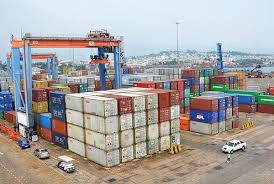
KHATMANDU: India is at risk of losing the Nepalese transit trade to China, whose high-speed rail link, particularly under the One Belt One Road (OBOR) initiative, compares favourably to the slow trundle of Indian goods trains and the capacity constraints on the border with Nepal. According to the World Integrated Trade Solution (WITS), set up by the World Bank and UN trade bodies, Nepal imported goods worth $6.6 billion in 2015 and exported goods worth $660 million.
India accounts for 60 per cent and 63 per cent, respectively, of Nepal’s imports and exports. The rest of the trade, valued at over $3 billion, is also routed through India.
You might also like

China controls only 14 per cent of Nepal’s trade demand, but is now aiming to significantly shift Nepal’s transit trade from India to itself.
The OBOR proposal itself is costly, and may have serious repercussions for the tiny Nepalese economy, where remittances account for almost 27 per cent of GD. But even given Nepal’s geographical proximity with India, the high cost of logistics makes the Chinese rail proposal seem more viable.
Nepal has so far been using Kolkata as a transit port, but loading and unloading take days. According to a BIMSTEC study, cargo arriving in Haldia takes 11.5 days to reach Birgunj in Nepal by rail, covering 680 km, against the 22 days’ sea travel from Shanghai to Kolkata. The cost of transporting cargo from Kolkata to Birgunj is much the same as the sea freight.
Due to efficient cargo handling, and flexible offers from Maersk Line and CONCOR, which have monopoly rights to take railway rakes to Nepal, Visakhapatnam port operations are cheaper than those at Kolkata, but only marginally. The sea freight advantage is eroded by higher rail freight due to a longer (by 1,400 km) distance.
The rakes’ travel time has increased from two-and-a-half days (Kolkata-Birgunj) to four-and-a-half days at an average of speed of 13 kmph; that speed is almost half the average goods trains’ speed of 25.5 kmph as claimed by the Railways’ in 2012-13.
At a recent workshop organised by the Nepalese Embassy in India, Railway officials admitted that a higher ratio (62 per cent in 2012-13) of passenger trains and low investment in track capacity are affecting goods movement.
But they blamed the poor handling capacity at the CONCOR-operated Birgunj dry-port (Himalayan Terminal) in Nepal and the delay in Customs clearance for the escalation in trade costs.
Railway data show serious capacity constrains at both the Raxaul (Bihar) railyard and Birgunj, which took 25 hours on an average in 2016-17 to unload a rake, against the stated capacity to unload two-and-a-half rakes a day.
CONCOR sources say they are constrained by inadequate siding capacity. The situation is no better at Raxaul, where Railways restricted loading on 35 of the 90 days from April to June. To ease congestion, the Railways is scheduled to open a new goods shed at Ramgarwa (the next station to Raxaul) by the end of this year.