NEW DELHI: India became the 71st country to join the United Nations TIR Convention to position itself as a regional trading and transit hub.
The TIR system is a global customs transit system with the widest geographical coverage. As other customs transit procedures, the TIR procedure enables goods to move under customs control across international borders without the payment of the duties and taxes. TIR Convention is more than a transport agreement and has a strong foreign policy element. China joined the TIR in 2016 when its giant inter-regional connectivity projects began to take off.


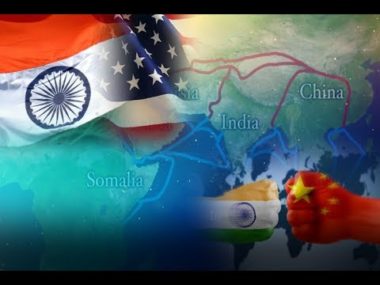
The report claimed that with China’s ‘One Belt One Road’ (OBOR) as the dominating project straddling economics and geopolitics, India had no other option but to play a better game to be counted as a rising power.
Chinese President Xi Jinping championed the initiative to build a new Silk Road linking Asia, Africa and Europe, a landmark programme to invest billions of dollars in infrastructure projects including railways, ports and power grids. It has dedicated $40 billion to a Silk Road Fund and the idea was the driving force behind the establishment of the $50 billion China-backed Asian Infrastructure Investment Bank (AIIB).
“TIR can help implement the Bangladesh-Bhutan-India-Nepal (BBIN) Motor Vehicles Agreement by addressing policy incompatibility among the BBIN group. For example, Bangladesh does not recognise insurance policies made in India, Nepal or Bhutan. With TIR, there would be no need for bilateral arrangements as guarantors are covered by the global guarantee chain,” Umberto de Pretto, Secretary General IRU (International Roads Union) which manages the TIR Convention, told TOI from Geneva.
Joining the convention “would be a major economic boost to South Asia, eventually connecting the region to the rest of the world. It could become a key link between South and South-East Asia, particularly as China is already a TIR member, and connects transit routes east to Myanmar, Thailand, Laos, Cambodia and beyond”.
According to him, India’s accession would have a big impact on regional connectivity and added that it can also connect India to maritime transport routes across the Asia-Pacific region.
Once the systems are integrated with global norms, India reckons it will become easier to service African and Asian markets when the DMIC (Delhi-Mumbai Industrial Corridor) comes online. It will breathe life into the International North-South Transport Corridor and the Chabahar project that India has been working on for some time, according to the Indian newspaper.
A statement from IRU said that this was “part of India’s multi-modal transport strategy that aims to integrate the economy with global and regional production networks”.