

Customs Today
  • Home
  • Islamabad
  • Karachi
  • Lahore
  • National
  • Transfers and Postings
  • Chambers & Associations
  • Business
No Result
View All Result
Customs Today
  • Home
  • Islamabad
  • Karachi
  • Lahore
  • National
  • Transfers and Postings
  • Chambers & Associations
  • Business
No Result
View All Result
Customs Today
No Result
View All Result
Home Science & Technology Science

India’s first attempt to set up observatory in space

byCustoms Today Report
30/09/2015
in Science, Science & Technology
Share on FacebookShare on Twitter

You might also like

Tesla driverless system to use updated radar technology

12/09/2016

Apple to develop its own self-driving technology

10/09/2016

MUMBAI: Scientists from TIFR, who led the mission in Mumbai, identified lack of adequate good quality manpower as a major logistical hurdle in the process of developing Astrosat.
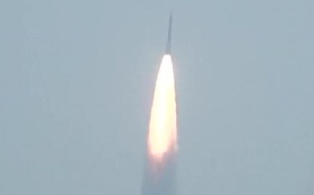
Hailed as a major milestone, a large part of the work on Astrosat, India’s first attempt at setting up an observatory in space, was done in Mumbai, and the team that worked on it had only about a dozen members, which was very lean for a project of such magnitude.
Scientists from the Tata Institute of Fundamental Research (TIFR), who led the mission in Mumbai, identified lack of adequate good quality manpower as a major logistical hurdle in the process of developing Astrosat.
Professor K P Singh, one of the principal investigators, said on Tuesday, “A core team of about 12-15 people for the entire duration is very small when you look at the magnitude of the project. For this kind of an effort in the US or European countries, the team would easily have comprised about 40 to 50 scientists.”
He added that a lean core team was probably one of the main reasons why an effort that began in 2004 was completed only now. “Acquiring talent in India for these kind of projects is a major logistical challenge,” Singh said.
Astrosat was launched by ISRO on September 28. Researchers from TIFR led the effort involving multiple institutions across India, and three of the major instruments were designed and developed by TIFR. The scientists also relied on industry help for procuring certain equipment and parts.

Related Stories

Tesla driverless system to use updated radar technology

byCT Report
12/09/2016

WASHINGTON: Electric carmaker Tesla announced Sunday it was upgrading its Autopilot software to use more advanced radar technology. In a...

Apple to develop its own self-driving technology

byCT Report
10/09/2016

SAN FRANCISCO: Apple may not become an automaker, but it still wants to develop its own self-driving technology. The iPhone-maker's...

NASA spots slowest known magnetar

byCT Report
10/09/2016

WASHINGTON: Astronomers have found evidence of a magnetar - magnetised neutron star - that spins much slower than the slowest...

‘YouTubers’ outshining old-school television

byCT Report
09/08/2016

SAN FRANCISCO: A media revolution is taking place, and most people over 35 years of age aren’t tuned in. Millennial...

Next Post

Four freight forwarding associations express concerns over Nigeria Customs clearance delays

  • Terms and Conditions
  • Disclaimer

© 2011 Customs Today -World's first newspaper on customs. Customs Today.

No Result
View All Result
  • Transfers and Postings
  • Latest News
  • Karachi
  • Islamabad
  • Lahore
  • National
  • Chambers & Associations
  • Business
  • About Us

© 2011 Customs Today -World's first newspaper on customs. Customs Today.