VANCOUVER: A Canadian National train carrying grain snakes its way along the Thompson River near Ashcroft, its cars stretching for miles through the low-rolling hills.
One day that train could potentially stop right there and unload, smack in the middle of Bob Landucci’s 130-hectare sage-cleared site in B.C.’s Interior. Indeed, that’s his intention once he gets the facility, dubbed the Ashcroft Terminal, running with everything from fleet management to transmodal and bulk transloading services.

“When we start doing business we can transload that into cars and they can take it back into the Prairies,” said Landucci, CEO of the terminal. “The traffic goes through here whether it’s coal, potash or grain.”
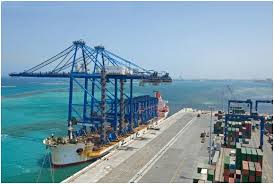
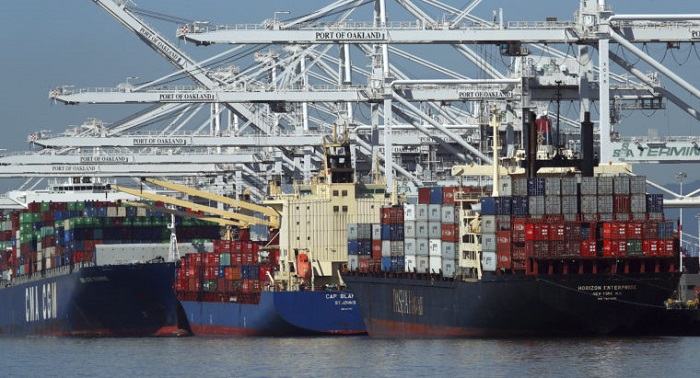
The terminal, which received its first containers from Hapag-Lloyd this week, has been in the making for more than a decade. Funded primarily by the Landucci family, with a $3.57-million grant from the federal government, the terminal is expected to offer an inland port for some of the 60 freight trains, including every car heading to and from Metro Vancouver, that now pass through the site each day.
The idea, he hopes, is to have some of those trains stop in Ashcroft and unload, which would limit the maze of rail rerouting that’s done now across B.C., cut the truck traffic congestion in the Lower ainland, and provide for a faster turnaround for the railroad. Every exported container in the Lower Mainland now requires two to three truck transfers.
Lumber from the West Fraser mill in 100 Mile House, for instance, could be trucked to Ashcroft, loaded on rail and taken directly to a terminal to be shipped overseas. Right now it’s hauled by rail to Metro, trucked to lumber storage and eventually hauled to a terminal, which takes two to four trips.
Such a move has been championed by Delta Mayor Lois Jackson, who says an inland port could play a significant role in relieving truck traffic congestion and land development pressures from Deltaport and the Roberts Bank Terminal 2.
A study commissioned by Delta found that if one truck out of 28 is replaced by rail by 2031, there would be 360 fewer one-way truck trips per day to and from Deltaport and Roberts Bank Terminal 2. This represents a five-per-cent decrease in truck traffic and equates to 12 million fewer truck kilometres driven annually.
The study assumes that the majority of cargo would bypass the inland port for continued transloading in the Lower Mainland since the inland terminal would only take a small percentage of the projected growth to 2031. But not only would it take some empty trucks off the road, Jackson said, it would reduce the need for Port Metro Vancouver to turn agricultural lands into industrial for port uses.
Delta maintains there has been a huge boost in speculation in agricultural land near Deltaport, with developers holding options to buy certain sections of land if it can be taken out of the Agricultural Land Reserve.
The Ashcroft terminal is seen as an ideal location because it’s already zoned industrial and is at the nexus of where both the CN and Canadian Pacific railways cross paths before branching off on their respective tracks on either side of the river. This means Ashcroft is the last location westbound and the first eastbound at which mainline traffic can stop on the way to or from Metro Vancouver.