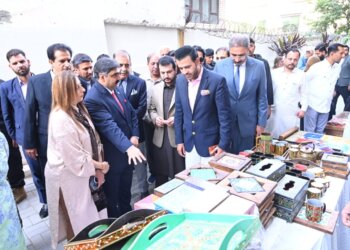
LAHORE: The country’s renowned economic watchdog, in his latest report, has suggested workable path towards economic growth and sustainable stabilisation.


The report is the brainchild of Humayun Akhtar Khan, the chairman of Institute for Policy Reforms (IPR) and former commerce minister.
The document recognises improvement in economic stability under an IMF programme. Balance of payments, fiscal deficit, and inflation are under control. Government must now focus on growth, while ensuring robust stability. Identifying increase in investment as the key to job creation and economic activity, the report proposes a doable growth strategy for immediate implementation. An expansionary monetary policy would lead the economy out of the morass of the past eight years. The growth strategy centres on three key areas: export increase, industrial revival, and public investment.
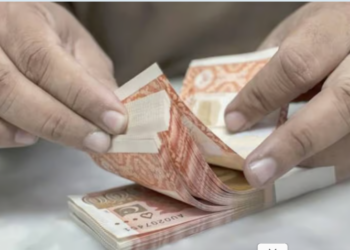
Despite stagnant exports, the Rupee has remained overvalued. The high value of the rupee came at a most inopportune time of slowdown in world trade. In fact, this was when many developing countries lowered the value of their currencies. This has placed our exporters at a disadvantage. The report sees the rupee overvalued by about 20%.
To revive industry, which too has seen unusual slowdown in recent years, IPR recommends long-term project financing at fixed rates. Currently, banks do not have the incentive to do so. At present, they use SBP loans (through OMO) to buy government paper and benefit from the interest rate arbitrage. SBP may introduce incentives for banks to set up a window for private capital investment. In the past, DFIs performed this performed this function. This one measure could help greatly industrial revival.
Public investment is the best means to expand jobs and boost growth. Scarce public investment has been a chronic problem in Pakistan. In addition, the inadequate funds available are often used for prestige projects without the desired economic impact. IPR recommends increase of the public programme to at least 5% of GDP. Currently, it stands at 3.8%. This increase will also provide additional funds needed for CPEC. Public spending crowds in private investment and has a high multiplier effect. An increase of one Billion Rupees, adds two Billion to GDP.
To place stabilization on a robust plank, the report makes a set of recommendations for control of expenses and increase in revenue.
The report recommends reduction in the number of federal ministries. For functions devolved fully to provinces, it is possible to do away with ministries at the centre. Government may also begin a process of zero-based budgeting. This way it can decide whether to continue with some of the many autonomous organizations that exist. Government can also rationalize debt-servicing expenditure by locking in the present reduced markup for debt. The report recommends a debt portfolio with two thirds invested in PIBs and one third in MTBs.
Loss making PSEs have preempted considerable federal resources as subsidies or grants. Government must revisit the way it manages PSEs. It should separate them from the administrative control of their respective Ministry. A holding company may be set up to review performance, set targets, and standards.
Perhaps the most important part of the report is its set of recommendations to increase tax revenue. Government can increase the tax / GDP ratio by four to five percentage points. This is especially possible by improving tax administration and enforcement.
Provinces must play their role in improving revenue. At present, agriculture income tax contributes a paltry one Billion rupees in taxes while the sector has a share of 21% in the economy. Weak performance of provincial Boards of Revenue has meant a presumptive tax scheme. Tax yield could increase by two percent of GDP by simply indexing assessment to current agriculture prices. Effective penalty for non-compliance will also help. Provinces must increase collection of urban property tax and tax on services.
Federal revenue lost to exemptions and incentives is high. Continued tax holidays for IPPs and under recovery of capital gains on securities alone account for Rs 100 billion. Tax deduction allowances amount to another Rs 100 billion. Government must ensure that these are targeted for the most productive sectors.
The report recommends capital gains tax on property and rationalization of import duties. The report recommends specific measures to enhance tax base by bringing in more individuals and companies in the tax net.
This brief, but very pointed report by an experienced hand provides a practical guide to policy makers to stimulate growth and reduce vulnerabilities of the economy.