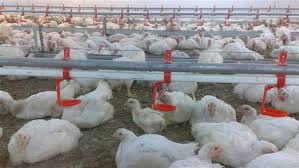
TEHRAN: Major egg producing Iranian provinces, namely Qazvin, Tehran, Alborz and East Azarbaijan, are dealing with an outbreak of avian flu, which has led to the culling of 16 million chicken and a rise in egg prices, the chairman of the board of directors at Tehran’s Union of Producers of Egg-Laying Chicken said. Nasser Nabipour added that the outbreak has caused losses worth over 20 trillion rials ($477.44 million) to production units.
Mohsen Bahrami Arz Aqdas, an official with the Ministry of Industries, Mining and Trade, announced that permits have been issued for the import of 20,000 tons of eggs, IRNA reported.


“Part of this volume has been ordered and some has been imported. This should make up for the egg shortage in the country,” he said.
Bahrami hoped that the imports would lead to a decrease in egg prices.
However, Nabipour believes egg imports for bringing balance to the market is not economical due to the high foreign currency rates and although the Agriculture Ministry has issued permits for imports, the volume remains low.
The decrease in egg distribution has led to a rise in egg prices, as the price of an egg tray (holding 30 eggs) has surpassed 180,000 rials ($4.2), reaching as high as 210,000 rials ($5.01) in some parts of Tehran.
The highly contagious H5N8 bird flu virus is deadly for poultry, but according to World Health Organization, although human infection with the virus cannot be excluded, the likelihood is low.
First Vice President Es’haq Jahangiri has issued a directive to the ministries of industries, economy and agriculture, Management and Planning Organization and the Central Bank of Iran, based on which the import tariff cut for eggs will be extended until March 20, 2018, IRNA reported on Sunday, citing the Legal Department of the Presidential Office.
Tariff on egg imports in Iran is at 55%. The initial tariff cut has been previously put in place with a deadline of Nov. 21, 2017, under the assumption that the flu outbreak would hit Iranian chicken farms in winter.
According to Nabipour, last year (March 2016-17), the avian influenza spread across 24 Iranian provinces leading to the culling of some 12 million chicken.
There are 1,600 units in Iran producing 2,600 eggs per day.
Each Iranian consumed 198 eggs on average in the last fiscal year (March 2016-17).
According to Secretary of Iran’s Union of Producers of Egg-Laying Hen Farzad Talakesh, the consumption rate is dwarfed by those of many other countries as the annual rate stands at 330 in Japan and Malaysia, 250 in China, Russia and the US, and 240 in Europe.
A 2013 report by the International Egg Commission indicated that Iran was the 10th biggest producer of eggs in the world that year.
Iran exported 40,000 tons of eggs last year, some 55,000 tons fewer than the previous year, as Iraq and Afghanistan banned the import of Iranian eggs and chicken early December following the outbreak.
Talakesh believes Iran’s egg exports cannot exceed 50,000 tons in the current Iranian year (started March 21), as the country has lost a huge number of chicken due to the outbreak and its export markets.
Iran’s per capita chicken consumption stands at 26-27 kg per year, while the global average is 13 to 15 kg.
According to Mohammad Yousefi, the head of Broiler Breeders Union, last year’s exports stood at about 50,000 tons, down from 80,000 tons in the previous year, registering a 37.5% decline as a result of the avian flu outbreak.