

Customs Today
  • Home
  • Islamabad
  • Karachi
  • Lahore
  • National
  • Transfers and Postings
  • Chambers & Associations
  • Business
No Result
View All Result
Customs Today
  • Home
  • Islamabad
  • Karachi
  • Lahore
  • National
  • Transfers and Postings
  • Chambers & Associations
  • Business
No Result
View All Result
Customs Today
No Result
View All Result
Home Science & Technology Science

ISRO to launch India’s 1st astronomy satellite

byCustoms Today Report
22/09/2015
in Science, Science & Technology
Share on FacebookShare on Twitter

You might also like

Tesla driverless system to use updated radar technology

12/09/2016

Apple to develop its own self-driving technology

10/09/2016

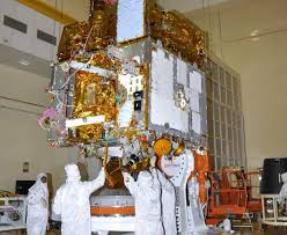
CANADA: The Indian Space Research Organization (ISRO) has announced that it is now ready to launch its first astronomy satellite ASTROSAT.
The agency said that the satellite will blast off from the Satish Dhawan Space Center, SHAR at 10 AM on Monday, Sept. 28, onboard PSLV-C30, which will carry the satellite into a 650 km.(404 miles) orbit.
Deviprasad Karnik, ISRO’s Public Relations director said that all preparations for the historic launch is in progress with the Mission Readiness Review Committee scheduled to meet up on Sept. 24 to decide for the countdown process of the vehicle.
Astrosat is being dubbed as India’s Hubble being the country’s first dedicated multi-wavelength space observation satellite.
A collaboration of NASA and the European Space Agency (ESA), the Hubble Space telescope has so far been making crucial contributions in the field of astronomy as it discovers new galaxies. Compared with Hubble’s optimal mirror which measures 2.4 m in diameter, Astrosat’s is about 30 cm or 11.8 inches.
With Astrosat, India will be included in the ranks of countries with such a satellite in space. Japan has Suzaku and Russia has Spektr R.
Astrosat is capable of conducting observations in Ultraviolet (UV), optical, low and high energy X-ray wavebands all at the same time.
Astrosat will study distant stars, pulsars and white dwarfs. The 1.5 ton satellite will measure the magnetic fields of neuron stars and understand high energy processes that occur in binary and extragalactic systems.

Related Stories

Tesla driverless system to use updated radar technology

byCT Report
12/09/2016

WASHINGTON: Electric carmaker Tesla announced Sunday it was upgrading its Autopilot software to use more advanced radar technology. In a...

Apple to develop its own self-driving technology

byCT Report
10/09/2016

SAN FRANCISCO: Apple may not become an automaker, but it still wants to develop its own self-driving technology. The iPhone-maker's...

NASA spots slowest known magnetar

byCT Report
10/09/2016

WASHINGTON: Astronomers have found evidence of a magnetar - magnetised neutron star - that spins much slower than the slowest...

‘YouTubers’ outshining old-school television

byCT Report
09/08/2016

SAN FRANCISCO: A media revolution is taking place, and most people over 35 years of age aren’t tuned in. Millennial...

Next Post

Icy mountains, flat ice plains extend Pluto’s horizon

  • Terms and Conditions
  • Disclaimer

© 2011 Customs Today -World's first newspaper on customs. Customs Today.

No Result
View All Result
  • Transfers and Postings
  • Latest News
  • Karachi
  • Islamabad
  • Lahore
  • National
  • Chambers & Associations
  • Business
  • About Us

© 2011 Customs Today -World's first newspaper on customs. Customs Today.