Customs Today
  • Home
  • Islamabad
  • Karachi
  • Lahore
  • National
  • Transfers and Postings
  • Chambers & Associations
  • Business
No Result
View All Result
Customs Today
  • Home
  • Islamabad
  • Karachi
  • Lahore
  • National
  • Transfers and Postings
  • Chambers & Associations
  • Business
No Result
View All Result
Customs Today
No Result
View All Result
Home Science & Technology Science

ISS captures stunning aurora over Earth earlier this week

byCustoms Today Report
27/06/2015
in Science, Science & Technology
Share on FacebookShare on Twitter

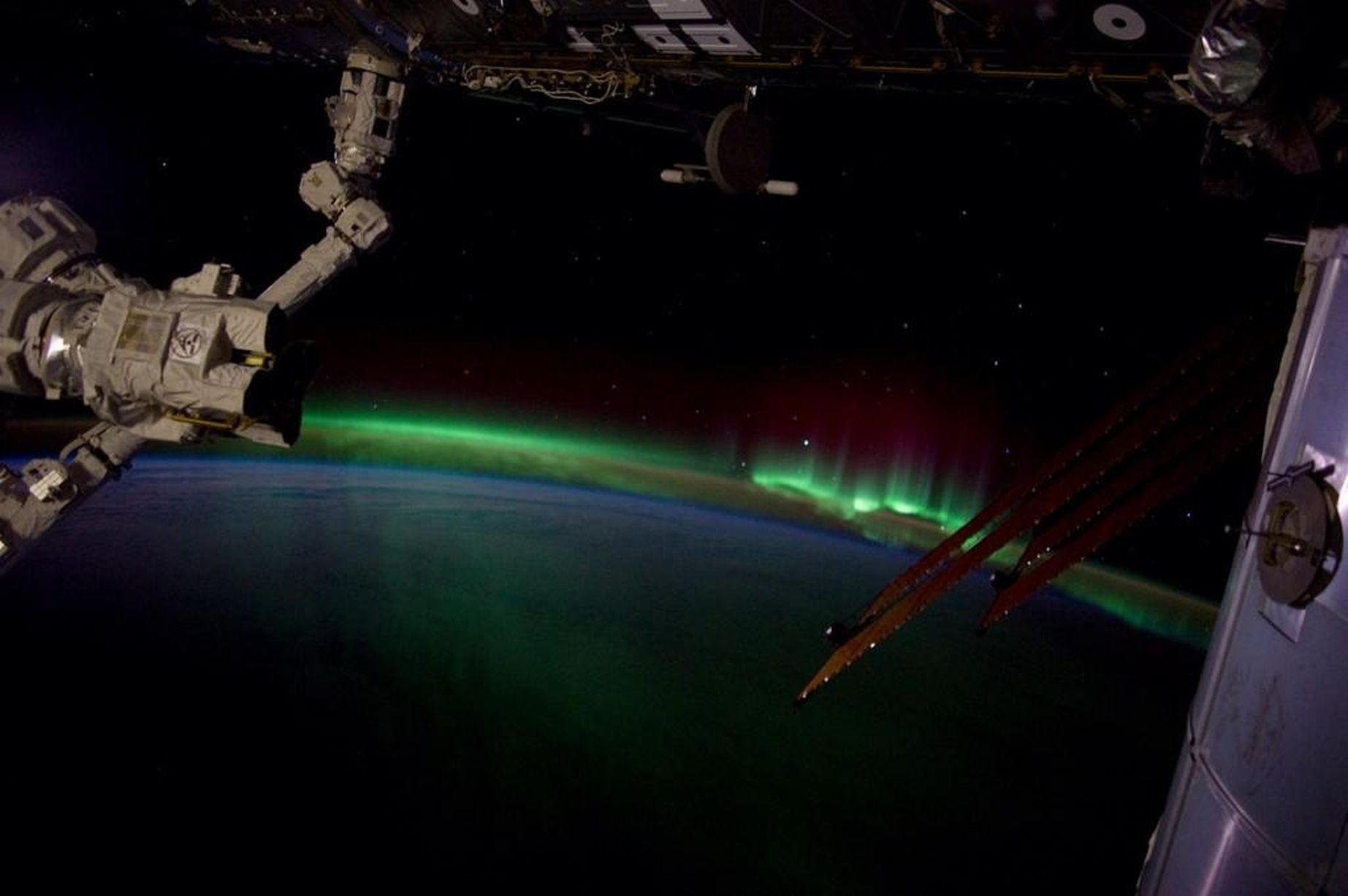
FRANCE: This image, taken from the International Space Station, captures the stunning glow of an aurora over planet Earth earlier this week.

Earth has played host to spectacular celestial light shows in recent days thanks to powerful geomagnetic storms erupting from the Sun.


You might also like

Tesla driverless system to use updated radar technology

12/09/2016

Apple to develop its own self-driving technology

10/09/2016

These storms of ionised plasma bathed a far greater area of the planet than usual.

The Aurora Australis or southern lights, which are normally only seen as far north as Tasmania, were visible all the way up to Sydney’s northern beaches and the New South Wales central coast.

The Aurora Borealis or northern lights, which are usually only visible in places like Alaska, Iceland, northern Europe, and Canada were seen as far south as Washington DC.

The lights occur as charged particles from the Sun collide with, and are channelled along Earth’s magnetic field lines towards the north and south magnetic poles.

As these particles reach thicker layers of Earth’s atmosphere above 90 kilometres, they collide with oxygen and nitrogen atoms in the rarefied air, exciting electrons and causing them release photons of light.

Aurora colours change depending on the particles being ionised.

Brownish-red hues are created by single oxygen atoms which are the most common atoms above 300 kilometres, while molecular oxygen levels increase at lower altitudes down to about 100 kilometres, producing an iridescent green glow.

A mixture of auroral emissions from oxygen and nitrogen produces a more whitish-yellow light.

Below about 100 kilometres, molecular nitrogen glows blue if it’s regaining electrons after being ionised and red if it’s returning to the ground state from an excited state. These blue and red colours can put a purple edge to the bottom of an aurora at about 90 kilometres.

NASA astronaut Scott Kelly captured the aurora from the space station on June 23, 2015.

Related Stories

Tesla driverless system to use updated radar technology

byCT Report
12/09/2016

WASHINGTON: Electric carmaker Tesla announced Sunday it was upgrading its Autopilot software to use more advanced radar technology. In a...

Apple to develop its own self-driving technology

byCT Report
10/09/2016

SAN FRANCISCO: Apple may not become an automaker, but it still wants to develop its own self-driving technology. The iPhone-maker's...

NASA spots slowest known magnetar

byCT Report
10/09/2016

WASHINGTON: Astronomers have found evidence of a magnetar - magnetised neutron star - that spins much slower than the slowest...

‘YouTubers’ outshining old-school television

byCT Report
09/08/2016

SAN FRANCISCO: A media revolution is taking place, and most people over 35 years of age aren’t tuned in. Millennial...

Next Post

Malaysia’s Glomac Bhd revenue hits RM472.2m

  • Terms and Conditions
  • Disclaimer

© 2011 Customs Today -World's first newspaper on customs. Customs Today.

No Result
View All Result
  • Transfers and Postings
  • Latest News
  • Karachi
  • Islamabad
  • Lahore
  • National
  • Chambers & Associations
  • Business
  • About Us

© 2011 Customs Today -World's first newspaper on customs. Customs Today.