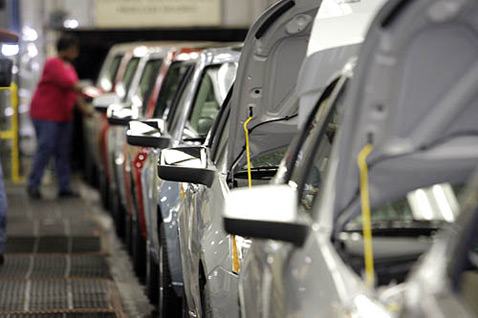
TOKYO: Nissan Motor and other Japanese automakers are looking to restart exports to Iran as the prospect of sanctions relief grows stronger.
Nissan has informed parts suppliers that it may resume shipments to the Middle Eastern nation for the first time since 2013 sometime next spring. It would send so-called knockdown kits, to be assembled locally, rather than finished autos. The automaker appears to be looking to export enough of these kits for several thousand vehicles a year.
Suzuki Motor is readying to ramp up exports of auto components for assembly in Iran. The company began producing around 4,000 sport-utility vehicles a year there in 2005, but the sanctions have reduced this output to a trickle since 2012. Suzuki is considering introducing new models to the Iranian market once the sanctions are lifted. Isuzu Motors plans to resume exports of light trucks and other models to Iran once that happens.
Toyota Motor will consider a restart of exports to Iran in earnest after the sanctions end. Japan’s biggest automaker halted shipments of passenger cars to that country in 2010. It had sold a few hundred vehicles there a year, including the Land Cruiser, through local dealers.
New-auto sales in Iran totaled about 1.1 million last year and are expected to reach 1.6 million in 2020 assuming the sanctions are lifted, according to IHS Automotive, a U.S. research company.
Mazda Motor resumed exports of some autoparts to Iran this past April in response to an easing of U.S. and European sanctions. The company had halted shipments in 2013. It is now supplying knockdown kits for the Mazda3 compact car and pickup trucks as well as replacement parts. About 1,000 of the Mazda3 sold in Iran last year. Mazda will consider expanding exports to the country.