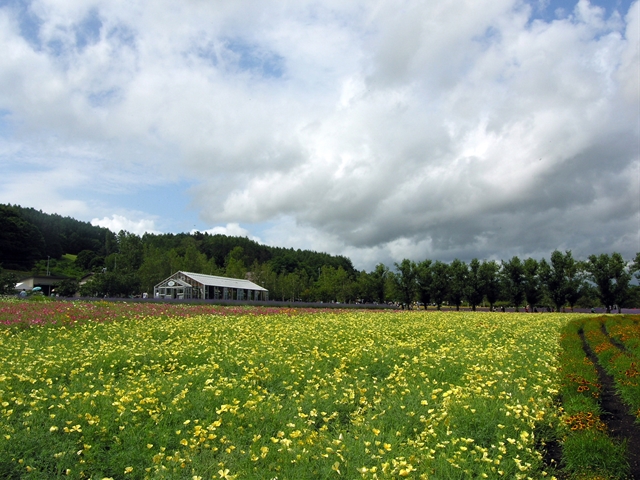
TOKYO: A powerful lobby stands in the way of two of the world’s biggest economies completing a trade deal. Rice is the island-nation’s staple grain and a powerful symbol of self-sufficiency. It is also among the thorniest issues holding up an agreement the two nations hope to unveil when Prime Minister Shinzo Abe and President Barack Obama meet in Washington next week.
“Rice is a social and political force. There is nothing quite like it in the U.S.,” said Tom Slayton, a former senior rice trade analyst at the U.S. Department of Agriculture who implemented an earlier U.S.-Japan rice agreement in the 1980s. “The Japanese are protecting a dinosaur, but it’s a dinosaur with a lot of clout.”
You might also like
Negotiators have been working for months on a deal that could become a part of a global deal being hammered out among 12 Pacific countries. The so-called Trans-Pacific Partnership would link economies making up 40 percent of the world’s gross domestic product and strengthen U.S. alliances in Asia, key trade and foreign policy goals for Obama.
If the U.S., the world’s biggest economy, and Japan, the third-biggest, can strike a bilateral deal, it would help pave the way for the larger accord.
Autos and agriculture have become the final snags. Japan wants the U.S. to eliminate a U.S. import tariff that was put in place to protect an industry that supports 900,000 manufacturing jobs. U.S. farm groups want Japanese trade restrictions lifted – – including for rice — further opening a market that’s already the biggest U.S. buyer of beef and pork.
The U.S. was Japan’s largest export market and second- biggest source of imports in 2013, according to the most recent government data. Last year, the U.S. sold $67 billion of goods to Japan and bought $133.9 billion worth.
The U.S. is the world’s fifth-biggest exporter of rice, trailing Thailand, India, Vietnam and Pakistan. Japan, where the grain has been culturally and economically important for millennia, imports almost none.
“The Japanese have always been very, very tough negotiators on agriculture issues. We’ve made progress, but rice is one of the fences that are still up,” said John Block, who served as Agriculture secretary under President Ronald Reagan.
Hiroshi Oe, Japan’s TPP ambassador, said rice is considered a politically sensitive product that must be protected, along with other grains, beef, pork, dairy and sugar crops. Japanese economic minister, Akira Amari, said Wednesday that rice is “100 times” more important to Japan than the U.S.
Getting Japan to open on rice requires “continued negotiations,” U.S. Agriculture Secretary Tom Vilsack said on Tuesday, declining to offer any specifics.
Part of Japan’s hesitancy to change its rice policy comes from the lobbying power of its farmers.
The nation’s union of farmer cooperatives, JA-Zenchu, has enjoyed special status since shortly after World War II, growing from an organization that fended off famine to a politically connected conglomerate that distributes farm supplies, sells agricultural products and dominates rural lending.
With nearly 10 million members, its influence in the ruling Liberal Democratic party has long kept Japanese farmers protected from the consolidation, displacement — and efficiency — of globalization.
That’s created a domestic market in which Japanese rice reigns supreme. Imports, begrudgingly allowed in a quota system agreed to under the World Trade Organization, remain unsold and unwanted.