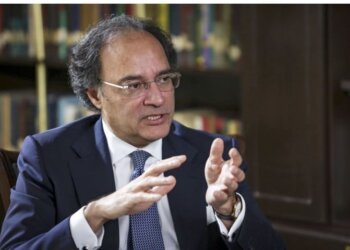
TOKYO: The Abe administration plans to push Japan’s large exporters to pass on benefits from the weaker yen to suppliers hurt by higher costs for imported raw materials, Deputy Economy Minister Yasutoshi Nishimura said.
“While the weak yen has been good for the Japanese economy overall, there has also been a negative side to that,” Nishimura, 52, said in an interview Tuesday at Bloomberg headquarters in New York. “We will win an agreement by asking via the Keidanren that the big companies that benefited from the weaker yen pass on those benefits by lifting prices to suppliers.” The Keidanren is Japan’s biggest business lobby.
You might also like

The plans reflect angst in some quarters of the Japanese economy about a policy of reflation and monetary expansion that has sent the yen to its weakest against the dollar in eight years. While large exporters have seen profits swell — firing up the nation’s stock market — they have been reluctant to boost domestic investment or increase wages much more than the pace of inflation.
Prime Minister Shinzo Abe has repeatedly called on the country’s large corporations to step up their contributions to his campaign to end two decades of stagnation. Finance Minister Taro Aso has suggested a levy on retained earnings should be examined.
Nishimura said that medium- and small-sized companies were hurt by the weak yen, which lifted the costs of imported raw materials. He said the government had compiled a supplementary budget to support these companies and will try to convince big exporters to raise the prices they pay suppliers.
The deputy economy minister is helping spearhead the government’s reform plans as the right-hand man to Economy Minister Akira Amari, a key architect of Abenomics. Six years ago, when Abe’s Liberal Democratic Party was out of office, Nishimura ran for the party leadership, losing out to Sadakazu Tanigaki. He was elected to parliament in 2003 after a career in the civil service.
The 29 percent decline in the yen against the dollar since Abe took office in December 2012 has helped companies including Toyota Motor Corp. and propelled the Nikkei 225 Stock Average through 20,000 in April for the first time in 15 years.
Even so, reluctance of companies to increase investment is hobbling a recovery from the recession that followed last year’s sales-tax increase. Capital expenditure fell for a third straight quarter in the three months through December, capping economic growth at an annualized 1.5 percent after two quarters of contraction.