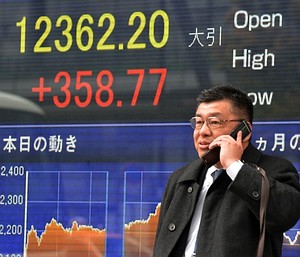
TOKYO: Japanese stocks rebounded after investors in the U.S. shrugged off the threat posed by Greece’s rejection of austerity measures.
Toyota Motor Corp., the world’s biggest carmaker by market value, added 0.6 percent. Parcel-delivery company Yamato Holdings Co. increased 3.2 percent after saying it will ally with Rakuten Inc. for an online-shopping delivery service. Oil explorer Inpex Corp. sank 0.7 percent after crude prices traded near their lowest in five months.
The Topix index added 1.3 percent to 1,641.52 as of 12:35 p.m. in Tokyo, after falling 1.9 percent on Monday. The Nikkei 225 Stock Average advanced 1.4 percent to 20,395.92. E-mini futures on the Standard & Poor’s 500 Index rose 0.3 percent after the underlying gauge lost just 0.4 percent on Monday. The Europe Stoxx 600 Index fell 1.2 percent.
“Investors have started to calm down now,” said Soichiro Monji, chief strategist at Tokyo-based Daiwa SB Investments Ltd., which oversees 5.8 trillion yen ($47 billion). “There was that initial reaction to the market yesterday following the Greek referendum, so it couldn’t be helped that stocks fell that much. But after those big declines yesterday, investors are having to accumulate again.”
The initial shock waves that hit markets after Greece’s decision last week to call a weekend referendum on austerity terms had dissipated into a ripple by the end of Monday trading, as investors speculated the crisis wouldn’t spread beyond the nation’s borders. Greece is now under pressure to come up with a plan to stay in the euro.
Euro-area finance ministers meet Tuesday for an emergency meeting after German Chancellor Angela Merkel said “time is running out” for Greece to come up with a plan to stay in the currency union. The European Central Bank maintained the level of Emergency Liquidity Assistance available to Greece, while tightening terms related to collateral. Greek banks remain shut through Wednesday.
“Yesterday’s Tokyo reaction to Greece went too far,” Toshihiko Matsuno, chief strategist at SMBC Friend Securities Co. in Tokyo, said by phone. “The European and U.S. market reaction at the start of the week wasn’t as negative as expected.”