
TOKYO: The Trans-Pacific Partnership trade pact will eliminate Japanese tariffs on hundreds of agricultural goods; a list released by the government shows, likely leading to lower prices for many popular foods.
Duties will be removed for about half of the 834 items on which they now are levied, though they will remain for sensitive items such as rice and wheat, the Ministry of Agriculture, Forestry and Fisheries announced. Japanese farmers could face much more competition from imports.
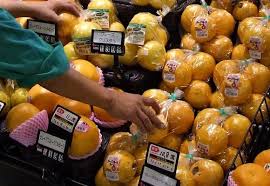
The trade deal looks likely to slice the price of oranges. Imports make up about 10% of domestic orange consumption, with TPP participants Australia and the U.S. accounting for 90% of that. The announced agreement will remove the orange tariff levied between April and November six years after the pact takes effect. A safeguard will be applied from December through March, when the most domestic oranges go on the shelves, to protect against a potential surge of imports. But that measure will be eliminated in the eighth year.
Tokyo supermarkets sell Australian navel oranges for around 60 yen (50 cents) each. Assuming import costs account for about half the retail price, removing the tariff could cut the price by 4 yen to 7 yen. That would sharply narrow the gap with medium-sized Japanese mandarin oranges, which sell for about 50 yen each.
For processed tomato products, the duty on ketchup and sauce will be removed in six to 11 years. A 460-gram bottle of imported ketchup now priced around 230 yen likely would cost around 20 yen less without the tariff.
The 12.8% duty on beef tongue and offal will be halved when the TPP takes effect, with the beef tongue tariff removed entirely in the pact’s 11th year.
Duties on major fishery products are expected to be eliminated by the agreement’s 16th year. The trade deal could boost the popularity of Coho salmon, on which a 3.5% tariff is currently applied. Chile, another TPP participant, accounted for more than 90% of the roughly 78,000 tons of Coho salmon imported in 2014. One 80-gram piece of the fish now sells for about 100 yen in Tokyo supermarkets.
Supermarkets and other buyers of imported foods have high hopes for the tariff cuts. If more inexpensive fresh meat goes on the market, customers will have an easier time buying it, an executive at a supermarket operator said.
“The issue going forward will be how to make use of the (tariff) regime, such as looking for different supply sources,” a major restaurant operator said.
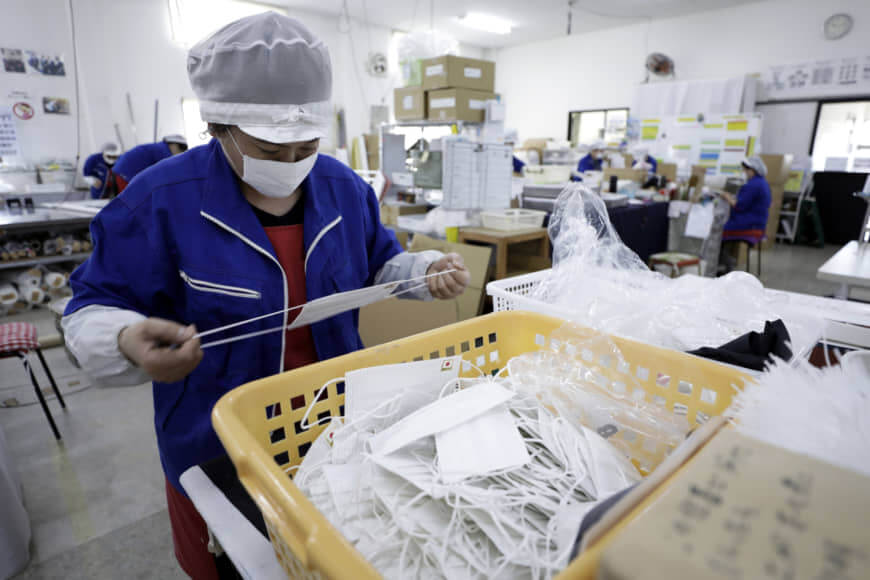
Japan mask prices surge on online flea markets amid coronavirus scare
OSAKA – As the shortage of face masks continues in Japan amid the spread of a new coronavirus originating in...