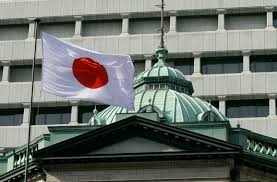
TOKYO: Japan’s central bank now holds over 300 trillion yen ($2.44 trillion) in Japanese government bonds as a result of long-term monetary easing measures — a development that is raising fears of market volatility.
The Bank of Japan’s bondholdings as of last Thursday equaled around 60% of the nation’s gross domestic product, figures released Monday show. That ratio is up from slightly under 30% in April 2013, when the central bank began massive quantitative and qualitative easing measures. Most European and U.S. central banks hold the equivalent of around 20% of their country’s GDP in bonds.


The Bank of Japan is currently snapping up long-term government debt at the pace of around 80 trillion yen annually. Easing measures centered on the bonds have managed to keep interest rates low, boosting lending by private-sector financial institutions.
But large-scale buying is boosting the bank’s influence on the market to potentially perilous levels. The central bank held 26.5% of outstanding bonds at the end of March, flow-of-funds figures show. But that ratio “recently hit 30%,” said Hidenori Suezawa of SMBC Nikko Securities. Private-sector institutions, by contrast, held 53.5% of JGBs at the end of March, nearing 50% for the first time since 1999.
“If the Bank of Japan keeps buying up bonds at its current clip, we could see the repercussions of lowered liquidity (in the market) in 2017 or 2018,” said Koichi Sugisaki of Morgan Stanley MUFG Securities.
“The bank could hold over 50% of bonds in the market by the end of 2018, with the value of holdings overtaking GDP. We urgently need policies that balance economic growth with the goal of rebuilding a sound fiscal foundation,” said SMBC Nikko’s Suezawa.
Over 80% of the 301 trillion in JGBs the Bank of Japan held as of last Thursday is long-term debt. Yields on newly issued benchmark 10-year JGBs fell one basis point from the previous business day to 0.35% on Monday. Though flight from stock markets toward safe investment spurred by China’s economic slowdown led the drop, the Bank of Japan’s buying spree is largely responsible for low interest rates overall.