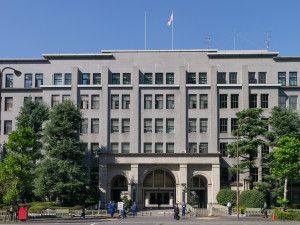
TOKYO: Japan’s Ministry of Finance is considering reducing its issuance of inflation-linked Japanese government bonds in the next fiscal year, a source with knowledge of the matter said, following the collapse in the price of the bonds this year.
In a rare revision to the bond sales plan before the new financial year actually begins on April 1, the ministry is considering reducing the sale of inflation-linked JGBs to 400 billion yen ($3.54 billion) per auction from the current volume of 500 billion yen ($4.43 billion), the source said, declining to be identified because the plan is not yet public.


The MOF plans four auctions in the fiscal year from April 1. The price of inflation-linked JGBs has been under pressure for months, as concerns about slowdown in the global economy and weak oil prices suppress investors’ inflation expectations.
Japan’s core consumer inflation has fallen to around zero in recent months from above 1 percent, excluding the impact of a sales tax hike in 2014, as the fall in oil prices and the yen’s rebound from earlier lows brought down household costs. .
With economic growth sputtering on the verge of recession, few investors expect inflation to accelerate much above zero anytime soon, let alone hitting the Bank of Japan’s target of two percent. Fall in the prices of inflation-linked JGBs, often called “linkers”, ironically accelerated after the BOJ adopted negative interest rates in January.
Although the BOJ’s shock announcement was intended to support the economy and boost sagging inflation expectations, the measure backfired as it raised worries about banks’ profitability and destabilised markets, rather than boosting economic morale.
As the price of inflation-linked bonds fell, their yield rose, narrowing the yield gap versus conventional bonds. The yield spread, called breakeven inflation (BEI), is widely seen as a measure of investors’ inflation expectations. The BEI of 10-year JGBs plunged to about 0.14 percentage point in mid-February, compared to about 0.53 percent just before the BOJ’s easing and above 1.0 percent less than a year ago.
That was the lowest level since Japan resumed selling inflation-linked JGBs in 2014 after a hiatus of more than five years. Japan’s biggest public pension fund, the Government Pension Investment Fund, has been a major buyer.
The source also said the Ministry of Finance was also considering resuming a buy-back programme for the inflation-linked bonds to shore up prices. The formal decision will be made after the ministry meets primary dealers and major investors later this month, the source added.
“If the ministry is reducing the sale of inflation-linked bonds, that will help reduce the burden on brokerages. The market could become more supported, especially after April, when consumer prices are likely to start rising,” said Keiko Onogi, senior strategist at Daiwa Securities.