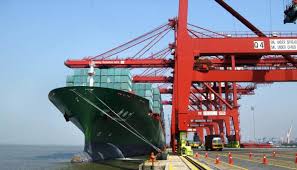
WASHINGTON: Jawaharlal Nehru Port Trust, which loads the majority of the containerized freight passing through India’s major, or public, ports, is continuing to invest in automation to standardize cargo procedures as part of its “ease of doing business” program to shore up productivity. The top port last week issued a customer advisory calling on all cargo interests to do away with individual systems for issuing of delivery orders and instead migrate to a common electronic application, named e-DO, to facilitate trade.
“In order to streamline the container delivery process, as part of the Ministry of Shipping directives, the Indian Ports Association, or IPA, was advised to develop a web-based application, so as to eliminate the manual interfaces,” JNPT said. “All customs house agents are requested to ensure that the e-DO generated by the web-based application be used for all the three terminals and common procedures be adopted for the convenience to the trade.” The port said the new automated module would help streamline cargo delivery procedures and reduce truck turnaround times.
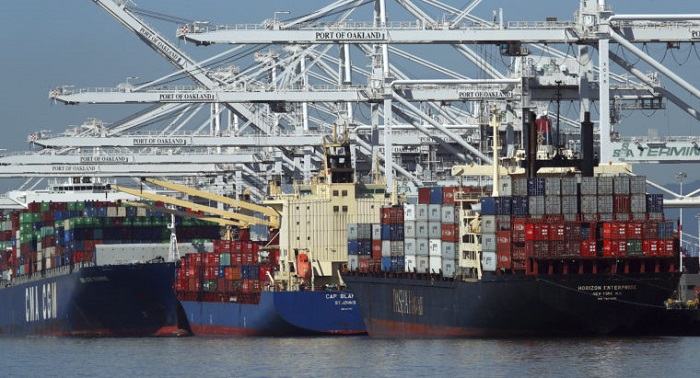

IPA and other authorities, including major ports and customs, have been working toward a single window program that aims to integrate all trade processes tied to delivery orders, transport orders, gate open-cut off times, delivery gate schedules, gate-in bookings, and pre-gate schedules under a digitized platform. In preparation for the rollout, consultations also have been held between JNPT officials and port-user representatives. In response, the Mumbai-Nhava Sheva Ship Agents’ Association has made a spate of suggestions for modifying the proposed system.
“Digitization is taking place in fragmented parts and obviously the effects are not felt upon the chain unless the entire chain, starting from the origin where trade enters cargo booking data only once and into a digitized system, used thereafter by all stakeholders, without unnecessary repetition of data,” MANSA said. Roughly 40 percent of India’s overall container trade moves via terminals at JNPT. The port has introduced a raft of measures to relieve congestion that took a heavy toll on its productivity and trade services last year with container lines forced to reroute vessels and drop off JNPT imports at other nearby ports.
Thanks to those efforts, especially electronic gate processing, congestion has eased considerably and cargo movements have picked up significant speed at the busiest port in the past months. As a result, the average dwell time for import cargo has fallen from 11 days to 1.5 days and for exports, that figure has shrunk from 88 hours to 63 hours, according to recent port updates.
More investments are under way at the port to lift productivity and meet future demand. Those include: Rs. 7,915 crore (approximately $1.2 billion) on a fourth container terminal by concessionaire PSA International in two stages meant to double capacity to 10 million 20-foot-equivalent units annually; Rs. 2,029 crore on dredging to deepen the 21-mile fairway to 15 meters (about 50 feet); and Rs. 2,936 crore on a 27-mile expressway connecting terminals with the interstate highway system.