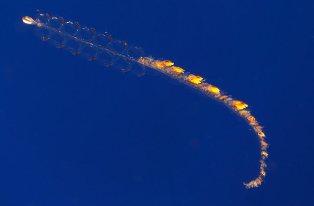


HONG KONG: Woods Hole, Massachusetts – A new research determined the swimming mechanism of jellyfish-like creatures, that use multiple jets. While jet propulsion is common among animal swimmers such as squids and jellyfishes, the integration of multiple jets into a coordinated propulsive entity is very rare in the animal kingdom.
The study, published in Nature Communications, monitored a colonial jellyfish-like species known as Nanomia bijuga. The animals use a practical, multi-jet propulsion system based on a team work divided between young and old members of the colony. Scientists suggest that this locomotive movement could help determine the design of underwater distributed-propulsion vehicles.
Lead author of the study, John Costello from Providence College, scientist and Whitman Center investigator at the Marine Biological Laboratory (MBL) in Woods Holes, said about the structure, “This is a highly efficient system in which no developmental stage is wasted. It’s a quite sophisticated design, for what would seem like a simple arrangement.”
For the process, young members are placed at the tip of the colony’s propulsive unit and use their little jets for turning and steering. The older and bigger members who are farther back, provide powerful thrusts as the colony travels from the depths to the surface of the ocean.

Karachi Port sets 138-year cargo handling record
KARACHI: Pakistan's maritime sector has achieved a major milestone as Karachi Port set a new record in its 138-year history...