KARACHI: Through the platforms of chambers/associations, Pakistan’s businessmen are urgently raising their concerns about the very high cost of electricity.
The urgency is palpable as industries are collapsing and exports are becoming unviable. They are on the verge of a strike if their demands to revisit IPP agreements and reduce costs are unmet.

The situation is critical, with about 15 to 20 per cent of industries in Karachi’s largest industrial area already suspending operations, and more likely to follow that path. They demand a rate of nine cents to compete in regional tariffs on power and exports.
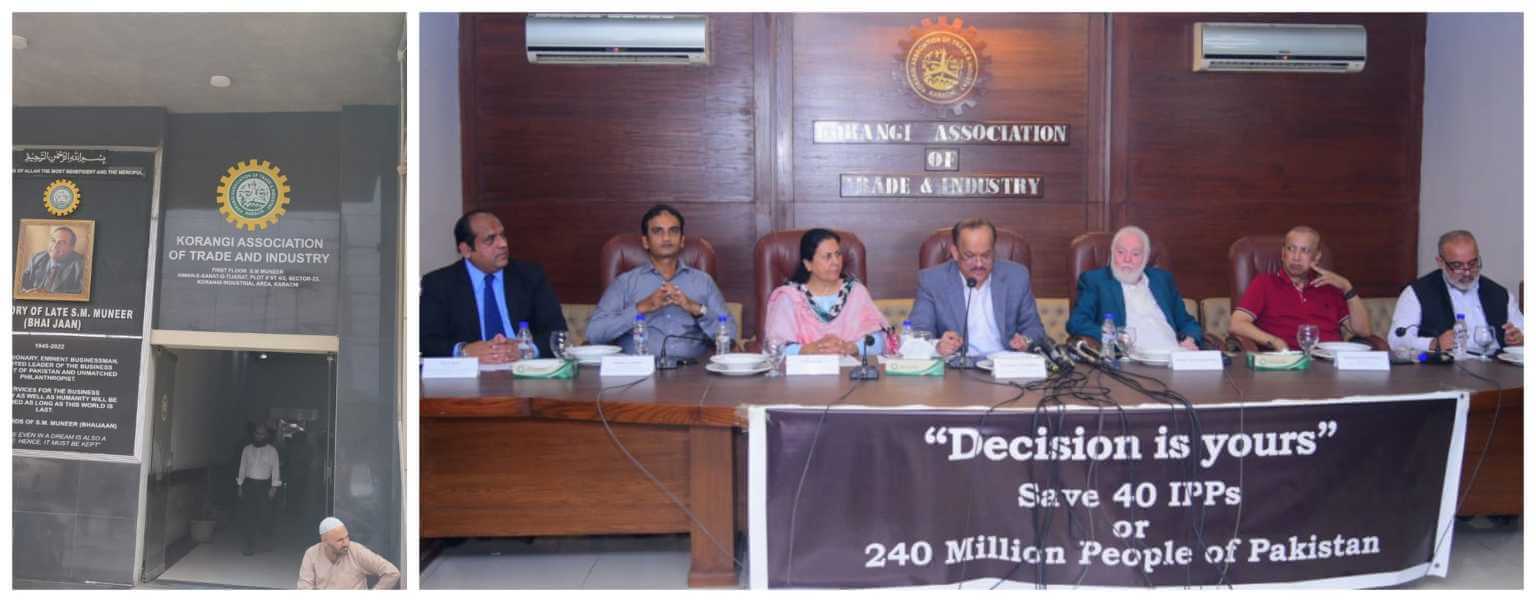
President of the Korangi Association of Trade and Industry (KATI), Johar Qandhari, raised a clarion call for economic reform during today’s emergency press conference. He demanded that the price of electricity be set at 9 cents per unit, criticizing the exorbitant payments to Independent Power Producers (IPPs).
Qandhari stated, “The IPPs are receiving more money than Pakistan’s defense budget.” He emphasized that the interests of the 240 million people of Pakistan should take precedence over the interests of the 40 families running these IPPs.
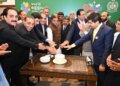
This is not just an issue for the business community but for every citizen of Pakistan. Present at the conference were notable figures including Senator Abdul Haseeb Khan, Senior Vice President Nighat Awan, Standing Committee Chairman Danish Khan, Rehan Javed, Former Presidents Saleem-uz-Zaman, Sheikh Fazal-e-Jalil, Ehtashamuddin, Razi Ahsan and other leading industrialists and journalists, all of whom understand the personal impact of this issue.
Qandhari called to cancel contracts with unnecessary private companies and conduct a forensic audit of the IPPs. He questioned, “Do we prioritise the interests of 40 IPP-running families, or do we care more for the 240 million citizens?” He lamented that the economic policies so far have favoured the former, leading to the neglect of the vast majority.
He highlighted that while the total production capacity of electricity installed is 45,000 megawatts, only 22,000 megawatts are utilised. He pointed out that the cost of a unit of electricity for consumers, without tax, is Rs35, which rises to Rs60 after tax. Out of the Rs35, Rs18 per unit is paid in capacity charges for unused electricity, pushing the economy towards destruction.
Qandhari detailed that Rs2,000 billion will be paid in capacity charges, putting severe pressure on the economy. He proposed changes to the capacity conditions of government-owned IPPs, which account for 45% of the market, including reducing management costs and shifting from LIBOR of the London Market to KIBOR for payments.
He also suggested renegotiating contracts with privately owned IPPs comprising 25% of the market to change from “Take or Pay” to “Take and Pay” agreements.
He urged the government to persuade China to negotiate debt restructuring and extend repayment periods for IPPs under CPEC. He also emphasised the need to expand transmission lines to fully utilise surplus electricity and use resources to generate cheap electricity.