NAIROBI: Kenya’s agriculture ministry said on Wednesday that the long rains which have just ended in various parts of the East Africa nation have boosted and further stabilized overall food security.
Acting Agriculture Cabinet Secretary Adan Mohamed told journalists that the national food security situation outlook for the remaining part of the year is expected to be on a continuous positive improvement trend.


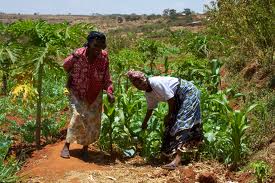
“The 2015 long rains have just ended with good performance in the middle and low rainfall areas. This resulted in average to above average food production in most parts of the country thereby boosting and further stabilizing overall food security,” Mohamed said. The CS said the number of people in need of food assistance has significantly declined to 1.07 million from over 1.6 million in February.
He said the Long rains are still on in the main food producing areas of Western and North Rift, the country’s grain basket, and peak harvesting is expected in October/November with complete end of harvesting season in December.
“With the good rains, significant food security improvement has also been recorded in the Arid and Semi Arid Areas (ASALS) where severe food insecurity prevailed in some counties at the beginning of the year,” he said.
According to the outcomes of 2015 Long Rains Food Situation Assessment carried out in July/August, most of the areas that were in Crisis Phase have already recovered and are now in Stressed/Minimal Food Insecurity Phase except some pockets in Isiolo, Western parts of Wajir and south western parts of Marsabit Counties.
Mohamed said improved food supplies have translated to improved stocks of major staples at various levels but majorly at household level. The national maize stocks as at Sept.1 stood at 14.64 million bags, with farmers holding about 6.74 million bags, traders 2,350,200 bags, millers 1.14 million bags and National Cereals and Produce Board (NCPB) 4.02 million bags.
Beans stocks totaled 906,850 bags, wheat 3.67 million bags and rice 343,470 bags. The improvement of various food stocks will continue through September/October as harvesting begins and continues in the Western parts of the country.
The current maize balance sheet projected from Aug. 1 to Dec. 31 shows that the available stocks are currently adequate to meet national needs for the next four months with a surplus of 12.1 million bags by end December, 2015.
“Stocks of other foods commodities are also adequate. Wheat harvesting began in August in the major wheat producing counties of Narok and Nakuru thereby boosting national local supplies,” Mohamed said.
According to the assessment, prices of common food staples are low and stable especially for beans, potatoes, fresh vegetables and fruits. In major markets, prices of vegetables are relatively low and stable, but prices of out of season fruits have increased but marginally.