HONG KONG: Prospective spacefarers can scratch Kepler-438b off their list of alien world destinations as the exoplanet has been proven to be too inhospitable to support life.
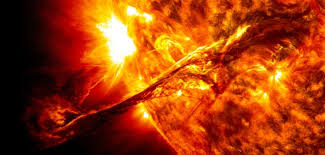
In a study featured in the journal Monthly Notices of the Royal Astronomical Society, researchers at the University of Warwick have discovered that Kepler-438b is located near a star that regularly blasts the Earth-like exoplanet with high-energy superflares every few hundred days.


While it is doubtful that these superflares on their own provide too much of an impact on the habitability of Kepler-438b, the researchers believe they can cause far-reaching effects when combined with massive plasma explosions called coronal mass ejections (CMEs).
These two occurrences may make it difficult for any form of life to establish itself on the exoplanet.
“Large coronal mass ejections have the potential to strip away any atmosphere that a close-in planet like Kepler-438b might have, rendering it uninhabitable,” Chloe Pugh, one of the authors of the study, explained.
Scientists have found that even though the exoplanet only takes around 35 days to complete its orbit, it is still considered to be within the “habitable zone” because its red dwarf star is relatively cooler and dimmer compared to the solar system’s own sun.
Pugh also pointed out that the insufficient atmosphere on Kepler-438b leaves it more susceptible to ultraviolet (UV) and charged particle radiation coming from the superflares, both of which can be devastating to life forms.