

LONDON: The planet-hunting Kepler will keep churning out new discoveries, Grunsfeld noted, and possibly find even better matches for “Earth 2.0″.
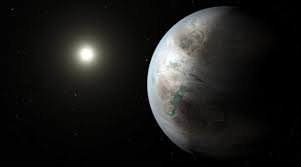
NASA said Thursday that its Kepler spacecraft has spotted “Earth’s bigger, older cousin”: the first almost Earth-size planet to be found in the habitable zone of a star similar to our own.
The exoplanet Kepler 452b orbits a sunlike star at about the same distance as Earth orbits the sun, scientists reported at a news conference July 23.
While Kepler-452b is larger than Earth, its 385-day orbit is only 5 percent longer.
“That’s considerable time and opportunity for life to arise somewhere on its surface or in its oceans should all the necessary ingredients and conditions for life exist on this planet”, he said.
But because it is 1.5 billion years older, they say it gives a “peek into a crystal ball showing a possible future for Earth” as it reaches a point where it is no longer habitable.
This discovery and the introduction of eleven different new small liveable zone candidate planets mark one other milestone within the journey to discovering one other “Earth”, stated NASA on its official website. Today’s announcements comes as NASA completed an initial analysis of data from the telescope, which has discovered more than 4,600 planets and planet candidates.

Karachi Port sets 138-year cargo handling record
KARACHI: Pakistan's maritime sector has achieved a major milestone as Karachi Port set a new record in its 138-year history...