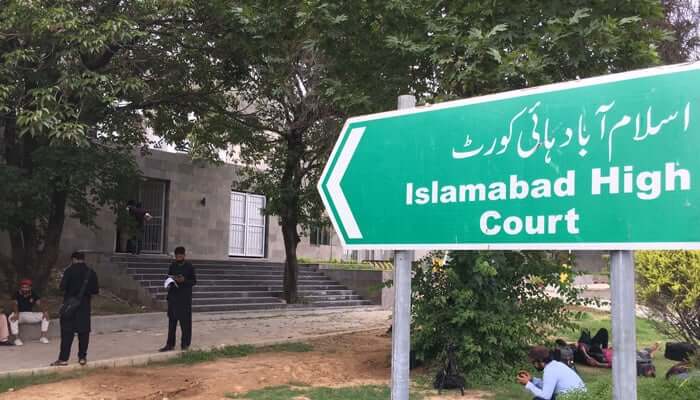
PESHAWAR: Pakhtunkhwa Energy Development Organisation (PEDO) has challenged the exclusion of two hydropower projects from the Indicative Generation Capacity Expansion Plan (IGCEP) 2025-35 before the Islamabad High Court, Business Recorder reported.
The petition stated that the IGCEP was brought under a constitutional framework in 2021 after a decision by the Council of Common Interests, which classified projects as “Committed” and “Indicative/Candidate” projects. According to PEDO, the classification is protected under Article 154(7) and cannot be altered by federal authorities or regulators.

The court admitted the petition and issued notices to the federal government, Independent System and Market Operator (ISMO) and National Electric Power Regulatory Authority (NEPRA).
The petition stated that PEDO’s 157MW Madyan Hydropower Project and 88MW Gabral Kalam Hydropower Project fulfilled all requirements for inclusion as “Committed Projects”.
It said both projects received PC-I approval from the Executive Committee of the National Economic Council on October 1, 2020, and secured concessional financing from the World Bank before the March 2021 cut-off date under the Khyber Pakhtunkhwa Hydropower and Renewable Energy Development Programme.
According to the petition, these approvals and financing arrangements were formally documented and were never disputed by any authority.
PEDO argued that exclusion of the projects from the committed category was therefore unlawful and unconstitutional. The petition also stated that the projects are run-of-river hydropower schemes planned in Swat and would contribute to low-cost electricity generation without the construction of large dams.
According to PEDO, inclusion of the projects in IGCEP would help reduce dependence on imported fuels, lower circular debt, and support climate and energy security objectives. The petitioner requested the court to declare the exclusion of the projects from the “Committed Projects” category in IGCEP 2025-35 illegal and without lawful authority.
It also sought directions for NEPRA and ISMO to include and retain the projects in future IGCEP plans unless their status is changed through a CCI decision.
The petition further challenged the retrospective application of a condition requiring at least 10% physical and financial progress for retaining “Committed” status, describing it as unlawful and beyond legal authority.