
ISLAMABAD: The incapacity of provinces for collecting Sales Tax on Services has become vivid due to the lack of infrastructure and skilled work force, on the other hand Federal Board of Revenue is not accepting their requests regarding the deputation of technical experts.
“Both the provinces and the Federal Board of Revenue (FBR) are required to enhance mutual cooperation to increase revenue collection, especially the collection of ‘Sales Tax on services’ an official source at FBR said.
Sales Tax on services is a devolved subject to provinces under the 18th constitutional amendment and provinces soon after the passage of the constitutional amendment started making arrangements to meet the challenge.
Three provinces, except Baluchistan, promulgated legislation to start the collection of Sales Tax on Services. In June 2011, the Sindh Assembly passed a bill authorizing the provincial government to collect general sales taxes on services, marking what is hoped to be the end of a decades-long battle between the federal and Sindh governments over the right to collect GST on services.
Similarly, the Khyber Pakhtunkhwa Revenue Authority (KPRA) started collecting sales tax on services from mid August 2013 as the KPK Sales Tax on Services Act 2013, authorized the provincial government to administer the sales tax on services in the province.
Sindh, Punjab and Khyber Pukhtunkhwa established their own separate Revenue Boards or Tax Authorities in this regard. But the Baluchistan requested the FBR to continue Sales Tax collection on its behalf.
These provinces started collection of Sales Tax on Services at the same rates on which FBR used to collect before the 18th amendment. However, provinces lacking capacity and infrastructure have not produced desired results in terms of volume of sales tax.
Consequently, provinces place demands with the FBR for the appointment of officials at provincial revenue authorities to meet the challenge of sales tax collection. But, FBR under the constraints of limited available human resources often turns down the requests forwarded by the provinces.
SRB asked the FBR to give technical experts of Grade 19-20; PRA requested for grade 17-18 officers and KPRA also requested for some technical officers. Responding to this, FBR informed the provincial revenue authorities/board that the FBR has shortage of officers, but it would try its level best to accommodate some technical officers to the provincial revenue authorities/board.
Initially, FBR with the purpose of provision of technical assistance to provincial revenue boards or tax authorities depute several officers and a grade 21 officer is still performing duties at Punjab Revenue Board. However, it was not possible for FBR to continue these services for longer period.
Furthermore, provinces are still using PRAL system to maintain the record of taxpayers which is a complex one, while provinces have not developed their own data base or data collecting system to enable tax authorities to produce desired results.
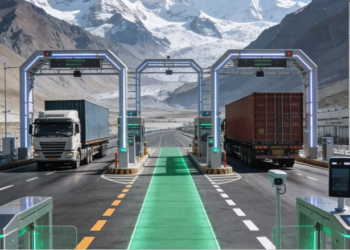
Furthermore, provincial revenue authorities are also facing problems in sales tax collection from dry ports situated in the provincial jurisdictions but owned by the federal entities like Pakistan Railways and others.
In this situation, it is suggested that the government with the aim to facilitate provinces in capacity building, either must direct FBR to depute able officers with provincial revenue authorities or bind provinces to submit a handful share of sales tax collection with FBR as adjustment to get support from the FBR in this connection