BEIRUT: The Investment Development Authority of Lebanon will soon receive a $21 million treasury loan to subsidize maritime exports for the coming seven months. The Investment Development Authority of Lebanon will soon receive a $21 million treasury loan to subsidize maritime exports for the coming seven months.
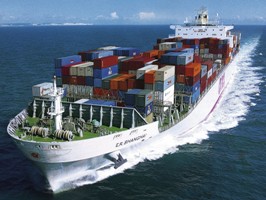
The Investment Development Authority of Lebanon will soon receive a $21 million treasury loan to subsidize the maritime export of agriculture and industrial produce for the coming seven months, IDAL’s Chairman Nabil Itani said.


“Circular 2156 was finally issued to approve the $21 million treasury loan for the support of the maritime export of Lebanese products,” Itani said at a news conference held Wednesday at IDAL’s headquarters.
Itani said the initiative would allow Lebanon to export its produce directly from Beirut Port to Aqaba in Jordan and Duba in Saudi Arabia.
“This new mechanism will facilitate the transport of Lebanese trucks using ferry boats by paying for each truck exported by sea the additional cost incurred when using such a mode of transportation,” he said.
Lebanon’s exports have suffered tremendously in the past three months following the closure of the Nassib border crossing, last functioning gateway from Syria to Jordan. The crossing was vital for the transportation of goods from Lebanon to major markets in the Gulf countries.
Agriculture Minister Akram Chehayeb proposed subsidizing the additional cost of the maritime export of locally produced products by allocating $21 million over the coming seven months.
Itani announce Wednesday the government’s approval of this new initiative, which will restore Lebanon’s access to its export markets.
“This decision is of the utmost importance because it allows Lebanese producers to maintain their export markets especially in the midst of the current deteriorating security situation in the region,” he said.
Lebanon’s agriculture and industrial produce witnessed a tremendous drop following the closure of the Nassib crossing, Itani said.
“Two months following the closure of the Nassib crossing, Lebanese agriculture exports witnessed a drop of 35 percent while the total volume of land export went down by 87 percent,” he said.
In contrast, maritime and air exports increased remarkably, he said. “Exports by air and sea went up by 87 percent and 328 percent respectively in the second half of this year which means that Lebanese exporters have started to adapt to new modes of transportation for their goods,” he said.