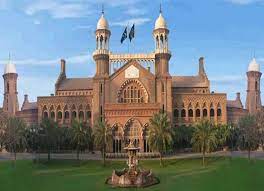
LAHORE: A division bench of the Lahore High Court’s Rawalpindi Bench comprising Justice Jawad Hassan and Justice Muhammad Raza Qureshi—has overruled the Federal Board of Revenue’s (FBR) objection to its jurisdiction in a petition challenging nearly 40% taxes, levies, and customs duties imposed on sanitary pads across Pakistan.
The court observed that millions of women live in Punjab, giving the Lahore High Court full jurisdiction to hear the matter. It expressed displeasure at the failure of multiple institutions to submit written responses and directed the federal government, the FBR chairman, the Ministry of Finance and the National Commission for Human Rights to provide clause-wise replies within two weeks.

During the proceedings, FBR’s counsel argued that because the respondents include the Federation of Pakistan and the FBR, the petition should have been filed in the Islamabad High Court, and thus the Rawalpindi Bench lacked authority. The bench dismissed the argument and ordered all respondents to file their written submissions before the next hearing.
Filed under Article 199, the petition was submitted by 25-year-old lawyer Mah Noor Umar, daughter of Umar Ali Khan, as a public-interest case concerning women’s rights.
The petition states that women constitute 48.51% of Pakistan’s population—about 151 million—yet sanitary pads remain heavily taxed. Critics call the cumulative 40% tax burden a “period tax”, arguing it effectively penalises women for a biological need.
Under the 1990 Sales Tax Act, locally manufactured sanitary pads are subject to 18% sales tax, while imported products and raw materials face 25% customs duty. According to UNICEF Pakistan, these combined taxes increase the price of a single sanitary pad by almost 40%.
The petition argues that such taxation is discriminatory and violates constitutional guarantees of equality, dignity, social justice, and protection from exploitation. In a society where menstruation is still considered taboo, high prices make sanitary products even more inaccessible.
A pack of 10 sanitary pads costs about Rs450, while Pakistan’s average monthly income is around $120—making it roughly equivalent to a family’s meal. Eliminating taxes, the petition argues, would bring prices within reach for millions of women.
Research by UNICEF and WaterAid (2024) reveals that only 12% of Pakistani women use commercial sanitary pads, with most relying on cloth or alternatives, often without safe water or sanitation. Reduced prices would significantly improve women’s health and mobility.
The petition requests the court to declare all taxes on sanitary pads unconstitutional, abolish them entirely, and direct the government to ensure free distribution in girls’ schools.
Petitioner’s counsel, Advocate Ahsan Jehangir Khan, argued that the case is about protecting women’s dignity, not just reducing costs. He referenced global precedents—such as India (2018), Nepal (2025), and the UK (2021)—which have eliminated the “period tax”. Making sanitary pads affordable, he argued, would help reduce school dropouts, support women’s participation in the workforce, and improve public health.