
Customs Today
  • Home
  • Islamabad
  • Karachi
  • Lahore
  • National
  • Transfers and Postings
  • Chambers & Associations
  • Business
No Result
View All Result
Customs Today
  • Home
  • Islamabad
  • Karachi
  • Lahore
  • National
  • Transfers and Postings
  • Chambers & Associations
  • Business
No Result
View All Result
Customs Today
No Result
View All Result
Home Ports and Shipping

Liberalization of shipping sector – Fact or fiction?

byCT Report
18/10/2018
in Ports and Shipping
Share on FacebookShare on Twitter

Colombo :Sri Lanka’s Finance Minister Mangala Samaraweera wrapped up the 2018 budget debate promising to end the country’s ‘nanny state’ approach and expressed his determination to press ahead with radical liberalization.

He went on to say, “To do this, we must be open to global trade, embrace competition and take on the world and win. Whilst the government will not be a nanny state, we do not forget the vulnerable and those who need the support of the state.” Brave words no doubt, heralding a much-needed change in overall approach. Among the industries targeted by the minister for liberalization was the shipping sector. What would this entail?
You might also like

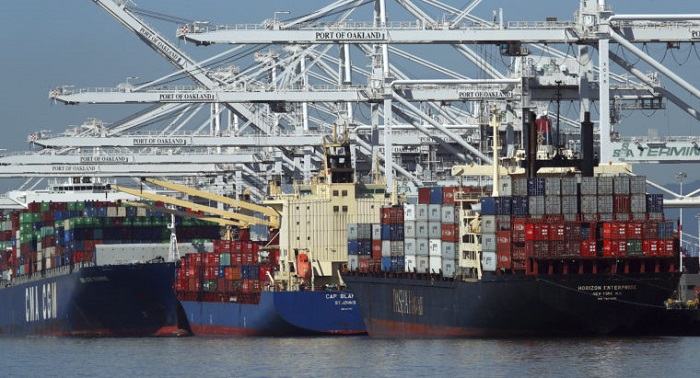
Container ships wait to be unloaded at the Port of Oakland on Wednesday, March 7, 2018, in Oakland, Calif. The U.S. trade deficit rose in January to the highest level since October 2008, defying President Donald Trump's efforts to bring more balance to America's trade with the rest of the world, the Commerce Department said Wednesday. (AP Photo/Ben Margot)

Shipping activity at Port Qasim on February 11

11/02/2021

KPT ships movement, cargo handling report Feb 10

09/02/2021

In the 60s and 70s, protection in shipping was the name of the game. Developing countries were eager to develop their national merchant fleets and their efforts were encouraged and supported by the UNCTAD’s Code of Conduct for Liner Conferences that proposed a cargo split of 40:40:20 – with the higher proportion to the respective fleets of the trading partners and the lower percentage to their flag carriers. It was a radical move.

Sri Lanka was in the forefront of this development with the establishment of the Ceylon Shipping Corporation (CSC) in 1971 and the Central Freight Bureau (CFB) in 1973. The CFB was the first organisation among the developing countries to have a mechanism in the form of a central freight booking office that had the ability to allocate cargo following the guidelines of the UNCTAD Code.

The CFB model was adopted by several developing countries with the technical assistance of the CFB officials. The CSC modernized its fleet from break bulk to containers and dominated the Sri Lankan market and also performed creditably in the India-Pakistan to Europe trade against fierce foreign competition.

However, with the winds of change ushering in open economic policies in Sri Lanka, as well as in many developing countries, protection for shipping in international trades began to lose its lustre. The Sri Lankan policymakers adapted to the change and the CFB was disbanded in the early 90s. The CSC was unable to weather the heightened level of competition (a period in which several carriers ceased to exist) and departed from liner shipping in the mid-90s.

Sri Lanka’s import and export trades were fully opened up for free competition. Any shipping line was able to call at Sri Lankan ports and shippers were free to make their choice of carrier at freight rates determined by market forces and the lines were permitted to select a local agent of their choice. Shipping was liberalized.

Related Stories

Container ships wait to be unloaded at the Port of Oakland on Wednesday, March 7, 2018, in Oakland, Calif. The U.S. trade deficit rose in January to the highest level since October 2008, defying President Donald Trump's efforts to bring more balance to America's trade with the rest of the world, the Commerce Department said Wednesday. (AP Photo/Ben Margot)

Shipping activity at Port Qasim on February 11

byCT Report
11/02/2021

KARACHI: Three ships namely, Glen Canyon, Al-Salam- II and TSM Pollux carrying Containers, Gas oil and Palm oil were arranged...

KPT ships movement, cargo handling report Feb 10

byCT Report
09/02/2021

KARACH: Following were the movements of ships and cargo handling at the Karachi Port Trust (KPT) during the last 24...

Container ships wait to be unloaded at the Port of Oakland on Wednesday, March 7, 2018, in Oakland, Calif. The U.S. trade deficit rose in January to the highest level since October 2008, defying President Donald Trump's efforts to bring more balance to America's trade with the rest of the world, the Commerce Department said Wednesday. (AP Photo/Ben Margot)

Shipping activity at Port Qasim on January 8

byCT Report
08/02/2021

KARACHI: Five ships namely, Diyala, MSC Jasmine, Stena Image, BW Danube, Goral Frost and carrying Containers, Palm oil, Mogas and...

Container ships wait to be unloaded at the Port of Oakland on Wednesday, March 7, 2018, in Oakland, Calif. The U.S. trade deficit rose in January to the highest level since October 2008, defying President Donald Trump's efforts to bring more balance to America's trade with the rest of the world, the Commerce Department said Wednesday. (AP Photo/Ben Margot)

Shipping activity at Port Qasim Feb 3

byCT Report
03/02/2021

KARACHI: Three ships namely, Maersk Detroit, Aye Evolution and Yufu Crown carrying Containers, Coal and Gas oil were allotted berths...

Next Post

Russia denounces new US sanctions on Iran businesses

  • Terms and Conditions
  • Disclaimer

© 2011 Customs Today -World's first newspaper on customs. Customs Today.

No Result
View All Result
  • Transfers and Postings
  • Latest News
  • Karachi
  • Islamabad
  • Lahore
  • National
  • Chambers & Associations
  • Business
  • About Us

© 2011 Customs Today -World's first newspaper on customs. Customs Today.