You might also like


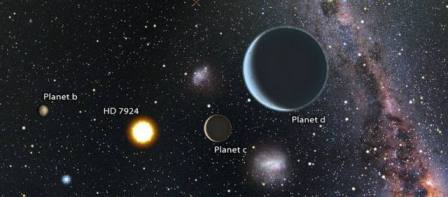
FRANCE: A robotic telescope working the late shift at the Lick Observatory has discovered three “super Earths” orbiting a nearby star. Originally human astronomers manned the Automated Planet Finder, a new telescope on Mount Hamilton outside San Jose, California but ultimately decided to replace themselves with a computer for the late night shifts.
“We initially used the APF like a regular telescope, staying up all night searching star to star. But the idea of letting a computer take the graveyard shift was more appealing after months of little sleep. So we wrote software to replace ourselves with a robot,” said Benjamin “BJ” Fulton a graduate student at the University of Hawaii in a statement.
The new planets, invisible to the naked eye, are rocky but much larger and closer to their host star than planets like the Earth and Mars.