

MEXICO: Most galaxies are clumped together in groups or clusters, with a neighbouring galaxy never far away.
But NGC 6503’s lonely location on the edge of this massive emptiness, seemingly devoid of any stars or galaxies, has led to it being called the “Lost in Space” galaxy.
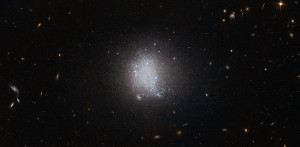
This new NASA/ESA Hubble Space Telescope image shows the ‘Lost in Space’ galaxy in striking detail.
An almost non-existent central bulge can be just seen, surrounded by a massive halo of gas.
The numerous bright red patches are huge clouds of gas scattered through the galaxy’s swirling spiral arms.
The gas is mixed with bright blue regions containing newly forming stars.
Dark brown dust lanes snake across the bright arms and galactic centre, giving NGC 6503 a mottled appearance.
The galaxy’s central region is a good example of a low ionisation nuclear emission region or LINER, which is far less luminous than what’s seen in brighter galaxies.
The ‘Lost in Space’ galaxy is 18 million light-years away in the northern constellation of Draco the dragon, and is actually one of our closest neighbours from the local galactic group.
About a third of the size of the Milky Way, NGC 6503 lies right on the edge of the Local Void, a dark empty region of space more than 150 million light-years across.

Karachi Port sets 138-year cargo handling record
KARACHI: Pakistan's maritime sector has achieved a major milestone as Karachi Port set a new record in its 138-year history...