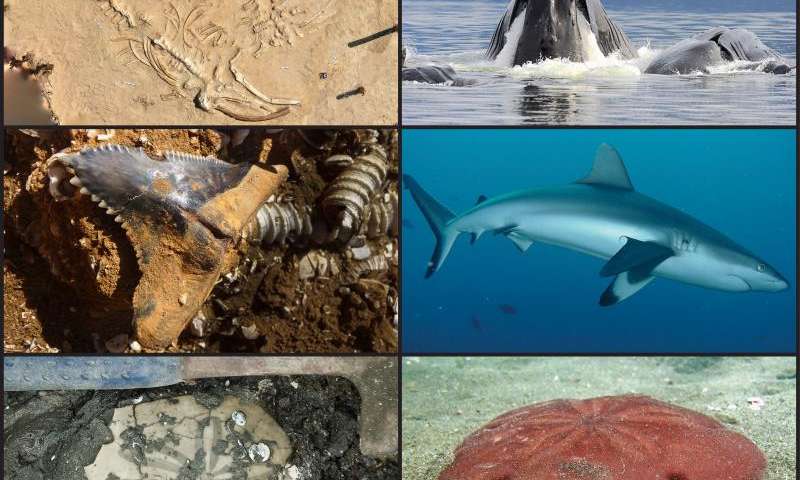
LONDON: US – Patterns of extinction in marine ecosystems over the last 23 million years have been revealed in a new study.
Worldwide patterns of extinction remained remarkably similar over this period, with the same groups of animals showing similar rates of extinction throughout.
You might also like


Researchers managed to identify a consistent set of characteristics associated with elevated extinction risk.
They then used these patterns as a baseline to predict which ocean areas and marine organisms would be most at risk today, without added threats of human-caused habitat destruction, overfishing, pollution and ocean acidification.
“Our goal was to diagnose which species are vulnerable in the modern world, using the past as a guide,” said study lead author Seth Finnegan.
Finally, the authors combined the natural or ‘intrinsic’ extinction risk with current threats from humans and climate change to obtain a global map of potential future hotspots of extinction risk.
“It’s very difficult to detect extinctions in the modern oceans, but fossils can help fill in the gaps,” said co-author Sean Anderson.
“Our findings can help prioritise areas and species that might be at greater risk of extinction and that might require extra attention, conservation or management.”
The study found that animals with small geographic ranges are most at risk of extinction, Mr Finnegan saidIn addition, some groups tend to be more extinction-prone than others. For example, in the fossil record, whales, dolphins and seals show higher risk of extinction than sharks or invertebrates such as corals. Clams and mussels, known as called bivalves, had about one-tenth the extinction risk of mammals.