MULTAN: Multan Chambers of Commerce and Industry (MCCI) has demanded customs authorities to cease the practice of requiring upfront payment of duties and taxes for import shipments, arguing that it contravenes the Trade Facilitation Agreement (TFA) and undermines the competitiveness of Pakistani businesses.
MCCI President Mian Rashid Iqbal criticized the upfront payment system, stating it contradicts the TFA’s principles of transparency, fairness, efficiency, and international competitiveness. The TFA, a global agreement, aims to streamline customs procedures and reduce trade-related costs.


“This practice imposes several challenges for importers in Pakistan,” Iqbal said. “Firstly, it places a substantial financial burden on small and medium-sized enterprises (SMEs), depleting their liquidity after filing goods declarations (GDs). Secondly, it delays the clearance of goods, leading to increased dwell times and unfair demurrages. Lastly, it undermines the global competitiveness of Pakistani businesses.”
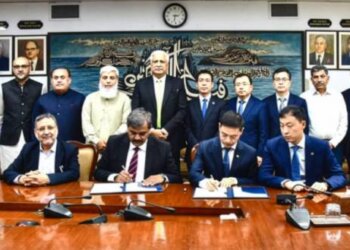
Iqbal proposed forming a liaison committee with the Federation of Pakistan Chambers of Commerce & Industry (FPCCI) and appointing focal persons to promptly resolve these issues. He noted that the attendance of numerous senior leaders from various trade bodies at a meeting with Member Customs Operations Zeba Hai Azher highlights the traders’ desire for solutions through an inclusive and consultative process.
MCCI Senior Vice President Sheikh Nadeem emphasized that Article 7.1 of the TFA explicitly states, “Members shall not require the payment of duties and taxes prior to the release of goods.” As a signatory to the agreement, Pakistan should comply with this provision to facilitate trade, he asserted.
Nadeem also highlighted that Pakistan’s average dwell time for imports is five days, significantly higher than the global average of 2.6 days, according to the World Bank’s Logistics Performance Index. “This extended dwell time is a substantial impediment to trade and economic development in Pakistan,” he added.
The MCCI’s call for change underscores the need for Customs authorities to align their practices with international standards, ensuring that Pakistani businesses can compete effectively on the global stage.