WASHINGTON: The results from Microsoft’s annual Internet user survey have just been published, revealing the likes and dislikes of Internet users from around the entire globe once again.
The yearly survey, which takes the pulse of many different nations that have a fully developed digital populace like Japan, the US, South Korea, China, Brazil and Russia, enlisted over 12,000 respondents to catch an accurate snapshot of what people around the world are enjoying when they sit down at their computers every day.
You might also like


Perhaps even more important, the survey finds what these Internet users worry about the most when it comes to online interactions – and the latest poll results are anything but surprising.
When it comes to positive effects, users said almost overwhelmingly that financial affairs are much better when linked to the Internet.
74 percent of respondents said that the Internet is excellent at keeping down the prices of objects thanks to competition, and 68 percent said that the Internet made it easier to start up a new business. A nearly identical number of respondents – 65 percent of them – said that the Internet has had a positive effect on productivity, meaning that what’s good for new companies is just as good for existing ones.
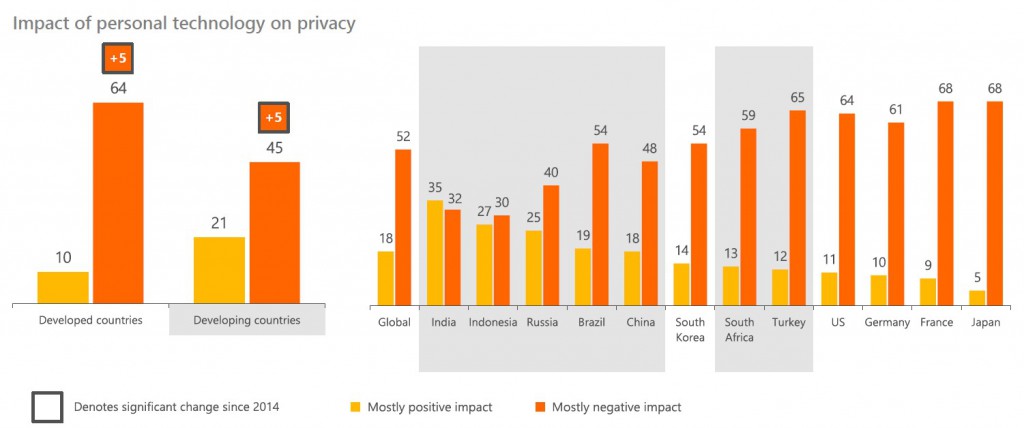
All in all, the majority of users had only one real complaint when it came to the Internet: privacy. It’s the most major concern for many, and even though the Internet may make it easier to forge social bonds between friends and family both near and far, the lion’s share of respondents feel that there are too few ways to legally protect user privacy online.
In fact, the only countries where a majority of respondents said that existing legal protections for the privacy of Internet users were Indonesia and India, with the two countries being the only ones where most of those surveyed felt they had full awareness of the types of personal information that advertisers and other entities can collect about them.
Meanwhile, when it came to both developed countries and those still in development, majorities of those surveyed said that Internet users should have legal rights linked to the particular country where they live.