Customs Today
  • Home
  • Islamabad
  • Karachi
  • Lahore
  • National
  • Transfers and Postings
  • Chambers & Associations
  • Business
No Result
View All Result
Customs Today
  • Home
  • Islamabad
  • Karachi
  • Lahore
  • National
  • Transfers and Postings
  • Chambers & Associations
  • Business
No Result
View All Result
Customs Today
No Result
View All Result
Home Science & Technology Science

Molybdenum disulphide, new technique developed for making graphene competitor

byCustoms Today Report
23/02/2015
in Science, Science & Technology
Share on FacebookShare on Twitter

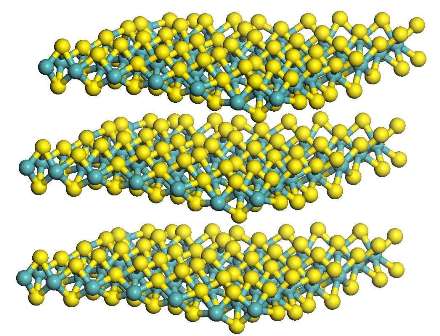
NEW YORK: Graphene is often touted as a replacement for silicon in electronic devices due to its extremely high conductivity and unbeatable thinness. But graphene isn’t the only 2-D material that could play such a role.

Univ. of Pennsylvania researchers have made an advance in manufacturing one such material, molybdenum disulphide. By growing flakes of the material around “seeds” of molybdenum oxide, they have made it easier to control the size, thickness and location of the material.


You might also like

Tesla driverless system to use updated radar technology

12/09/2016

Apple to develop its own self-driving technology

10/09/2016

Unlike graphene, molybdenum disulfide has an energy band gap, meaning its conductivity can be turned on and off. Such a trait is critical for semiconductor devices used in computing. Another difference is that molybdenum disulphide emits light, meaning it could be used in applications like LEDs, self-reporting sensors and optoelectronics.

The study was led by A. T. Charlie Johnson, professor in the Dept. of Physics & Astronomy in Penn’s School of Arts & Sciences, and includes members of his lab, Gang Hee Han, Nicholas Kybert, Carl Naylor and Jinglei Ping. Also contributing to the study was Ritesh Agarwal, professor of materials science and engineering in Penn’s School of Engineering and Applied Science; members of his lab, Bumsu Lee and Joohee Park; and Jisoo Kang, a master’s student in Penn’s nanotechnology program. They collaborated with researchers from South Korea’s Sungkyunkwan Univ., Si Young Lee and Young Hee Lee.


Tags: graphene competitorMolybdenum disulphide

Related Stories

Tesla driverless system to use updated radar technology

byCT Report
12/09/2016

WASHINGTON: Electric carmaker Tesla announced Sunday it was upgrading its Autopilot software to use more advanced radar technology. In a...

Apple to develop its own self-driving technology

byCT Report
10/09/2016

SAN FRANCISCO: Apple may not become an automaker, but it still wants to develop its own self-driving technology. The iPhone-maker's...

NASA spots slowest known magnetar

byCT Report
10/09/2016

WASHINGTON: Astronomers have found evidence of a magnetar - magnetised neutron star - that spins much slower than the slowest...

‘YouTubers’ outshining old-school television

byCT Report
09/08/2016

SAN FRANCISCO: A media revolution is taking place, and most people over 35 years of age aren’t tuned in. Millennial...

Next Post

New filter could to lower air pollution developed by Stanford engineer

  • Terms and Conditions
  • Disclaimer

© 2011 Customs Today -World's first newspaper on customs. Customs Today.

No Result
View All Result
  • Transfers and Postings
  • Latest News
  • Karachi
  • Islamabad
  • Lahore
  • National
  • Chambers & Associations
  • Business
  • About Us

© 2011 Customs Today -World's first newspaper on customs. Customs Today.