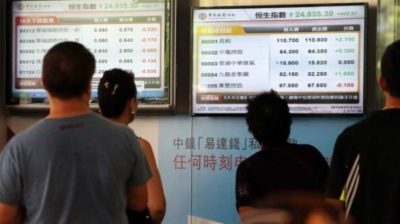
TOKYO: Most Asian stocks rose, led by Japan, as the yen weakened amid growing confidence that the U.S. economy is strengthening enough to handle higher borrowing costs as early as this summer.
The MSCI Asia Pacific Index, which is denominated in dollars, fell 0.2 percent to 128.21 as of 9:04 a.m. in Tokyo. Federal Reserve Chair Janet Yellen said in remarks at Harvard University on Friday that an improving American economy would probably warrant another rate increase “in the coming months,” sending the dollar higher against the yen. Japan’s Topix index rose 0.5 percent as exporters advanced and an aide to Prime Minister Shinzo Abe said he will probably delay a sales tax increase for two years.
“The message from the Fed remains that a rate hike is getting closer,” said Shane Oliver, head of investment strategy at Sydney-based AMP Capital Investors Ltd., which oversees about $120 billion. “Caution and delays from the Fed have provided confidence that it is not going to be reckless.”
The Asia Pacific gauge is down 2.5 percent this month, the worst month since an 8 percent plunge in January, as investors’ anxiety over the U.S. central bank’s plan to raise interest rates offset increasing signs of strength in the world’s biggest economy. Investors have been whipsawed this year, with the regional gauge slumping 14 percent through a February low on concern a devaluation of the Chinese yuan would curb global growth and amid prospects for higher U.S. borrowing costs. It then rallied almost 20 percent through this year’s peak in April before retreating again.
Australia’s S&P/ASX 200 Index climbed less than 0.1 percent. New Zealand’s S&P/NZX 50 Index was little changed, while South Korea’s Kospi index dropped 0.1 percent.
Traders are pricing in a 30 percent chance the Fed will increase rates in June, up from 4 percent earlier this month. July shows a 54 percent probability of higher U.S. borrowing costs, up from 51 percent earlier Friday.
Abe will probably delay a sales tax increase for two years, according to an aide. He is pushing his stimulus agenda even after fellow G-7 leaders failed to join him in warning of a global economic crisis. Japanese consumers may enjoy a lower levy until late 2019, Hakubun Shimomura told Fuji TV, adding the country has no other option. Abe will also propose a fiscal spending package of as much as 10 trillion yen ($90.6 billion), the Nikkei reported.
Futures on Hong Kong’s Hang Seng Index added 0.1 percent, while those on the Hang Seng China Enterprises Index of mainland firms listed in the city were little changed.