

Customs Today
  • Home
  • Islamabad
  • Karachi
  • Lahore
  • National
  • Transfers and Postings
  • Chambers & Associations
  • Business
No Result
View All Result
Customs Today
  • Home
  • Islamabad
  • Karachi
  • Lahore
  • National
  • Transfers and Postings
  • Chambers & Associations
  • Business
No Result
View All Result
Customs Today
No Result
View All Result
Home Uncategorized

Motor proteins prefer slow, steady movement: Rice University researchers

byCustoms Today Report
24/02/2015
in Uncategorized
Share on FacebookShare on Twitter

You might also like

Pakistan to get $3b loan from Islamic Trade Financing Corporation

20/10/2024

Lahore I&I & Enforcement anti-smuggling operations achieve record success in early FY 2024-25

10/09/2024

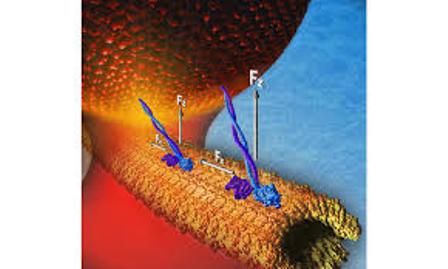
WASHINGTON: Rice University researchers are modeling the movement of motor proteins along a microtubule by breaking the pathway down into its basic elements.
The study suggests that the collective behavior of motor proteins like kinesins keeps cellular transport systems robust by favoring slow and steady over maximum movement.
The interactions once thought to be of little relevance are worthy of further study, according to Rice theoretical biophysicist Anatoly Kolomeisky. Small changes that may be controlled with medications can have a large effect on cell dynamics, an important consideration in treating disease, he said.
His group’s paper in the Journal of Physics A: Mathematical and Theoretical describes a new theoretical approach to study the effect of intermolecular interactions on the dynamics of motor proteins that move along cytoskeletal filaments known as microtubules.
Motor proteins powered by adenosine triphosphate, which supplies chemical energy, “walk” along microtubules to deliver cargo throughout cells and discard trash. Previous work by Kolomeisky and his students showed how microtubules are continually built, destroyed and rebuilt by cells that reuse the molecular building blocks like Legos.
The new mathematical model built by lead author Hamid Telmouri and co-author Kareem Mehrabiani, both Rice graduate students, analyzes short sequences of those blocks to demonstrate that both strong and weak interactions are important to regulate the flux, or movement, of motor proteins.


Tags: Anatoly KolomeiskyHamid Telmourikinesins keepsMotor proteins prefer slowRice University researcherssteady movement

Related Stories

Pakistan to get $3b loan from Islamic Trade Financing Corporation

byCT Report
20/10/2024

ISLAMABAD: Islamic Trade Financing Corporation (ITFC) to provide Pakistan with a $3 billion loan, according to an official statement released...

Lahore I&I & Enforcement anti-smuggling operations achieve record success in early FY 2024-25

byCT Report
10/09/2024

LAHORE:  Regional Directorate of Customs Intelligence & Investigation has demonstrated exceptional performance in the first two months of the fiscal...

ICCI and CDA to join hands for tree plantation drive in Capital

byQaisar Mansoor
09/08/2023

ISLAMABAD: Islamabad Chamber of Commerce and Industry (ICCI) in collaboration with the Capital Development Authority (CDA) would jointly launch a...

Customs Officials Yawar Abbas & Tariq Mehmood kidnapped in Karachi

byCT Report
08/07/2023

KARACHI: Customs Intelligence Officer Yawar Abbas and Customs Preventive Officer Tariq Mehmood who were working against smuggling were kidnapped by...

Next Post

Germany govt budget records surplus of 11.4 billion euros in 2014

  • Terms and Conditions
  • Disclaimer

© 2011 Customs Today -World's first newspaper on customs. Customs Today.

No Result
View All Result
  • Transfers and Postings
  • Latest News
  • Karachi
  • Islamabad
  • Lahore
  • National
  • Chambers & Associations
  • Business
  • About Us

© 2011 Customs Today -World's first newspaper on customs. Customs Today.