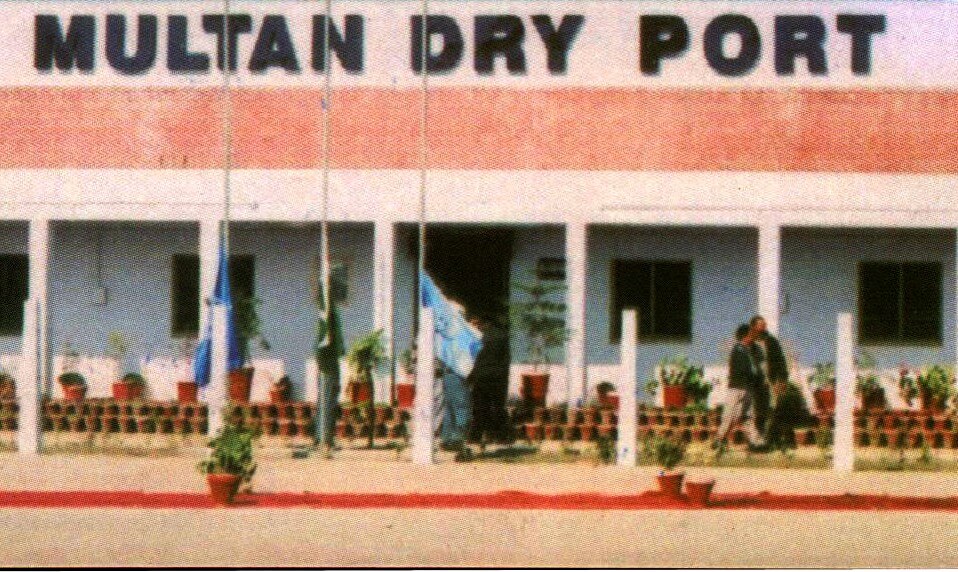
MULTAN: Multan Dry Port, a vital trade hub in South Punjab, has been engulfed by a record-shattering 157mm of rainfall, marking the city’s most severe downpour in nearly five decades.
The torrential rain has turned the port into a vast, waterlogged zone, crippling its infrastructure and bringing all import and export activities to a grinding halt.


The unprecedented deluge overwhelmed the port’s drainage system, submerging critical areas, including the export and import clearance sheds. In response, port authorities have declared an emergency and issued immediate orders to meticulously inspect all shipments to safeguard them against potential water damage during the clearance process.
Transporters, caught in the midst of the chaos, have hastily relocated their vehicles to higher ground, yet the disruption has already caused significant delays, with ripple effects expected to impact trade flows throughout the region.
As efforts to drain the water and restore operations continue, the forecast of additional rainfall adds a layer of uncertainty to the recovery timeline. This situation underscores the pressing need for robust infrastructure capable of withstanding the growing intensity of extreme weather events, which are increasingly linked to climate change.
The disruption at Multan Dry Port is not just a logistical setback but a wake-up call for regional planners and businesses to prioritize climate resilience in their future strategies, ensuring that key trade arteries like this one remain operational even in the face of nature’s growing unpredictability.