Customs Today
  • Home
  • Islamabad
  • Karachi
  • Lahore
  • National
  • Transfers and Postings
  • Chambers & Associations
  • Business
No Result
View All Result
Customs Today
  • Home
  • Islamabad
  • Karachi
  • Lahore
  • National
  • Transfers and Postings
  • Chambers & Associations
  • Business
No Result
View All Result
Customs Today
No Result
View All Result
Home Science & Technology Science

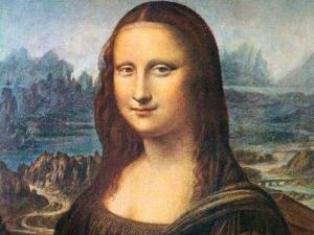
Mystery of the Mona Lisa’s smile solved

byCustoms Today Report
22/08/2015
in Science, Science & Technology
Share on FacebookShare on Twitter

LONDON: Scientists may have discovered the secret behind one of the most famous mysteries in the history of art – Mona Lisa’s smile.

Experts from two UK universities said a new study of another painting believed to be by Leonardo da Vinci, La Bella Principessa, proves that it uses the same technique of the “uncatchable smile”. The illusion behind Mona Lisa’s enigmatic quality is thought to stem from the fact that she appears to be smiling -until the viewer looks directly at the subject’s mouth, at which point it seems downturned.


You might also like

Tesla driverless system to use updated radar technology

12/09/2016

Apple to develop its own self-driving technology

10/09/2016

The big question for experts is whether or not this effect -created through a complex combination of colours and shades -was intended by Da Vinci himself.

Research has proven La Bella Principessa to be an ear lier work by the same artist, according to Sheffield Hallam’s psychology professor and expert in visual perception Ales sandro Soranzo. The painting is thought to depict 13-year-old Bianca Sforza, the daughter of Ludovico Sforza (Il Moro), duke of Milan, before her marriage to a commander of the Milanese forces.

Soranzo said, “the existence of a similar illusion in a portrait prior to the Mona Lisa becomes more interesting”. The expert and his team used a series of experiments to examine how the viewer perceives the two paintings when factors such as the viewing distance and the level of “blur” applied to the image were altered.

They also examined a third painting, Portrait of a Girl by Piero del Pollaiuolo, as a control.

Researchers found that, when viewed from a greater distance or with a greater blur affect, the smiles perceived in the two paintings increased. The same was not the case for the piece by Del Pollaiuolo. Soranzo said, “Given da Vinci’s mastery of the technique, and its subsequent use in the Mona Lisa, it is quite conceivable that the ambiguity of the effect was intentional.”


Related Stories

Tesla driverless system to use updated radar technology

byCT Report
12/09/2016

WASHINGTON: Electric carmaker Tesla announced Sunday it was upgrading its Autopilot software to use more advanced radar technology. In a...

Apple to develop its own self-driving technology

byCT Report
10/09/2016

SAN FRANCISCO: Apple may not become an automaker, but it still wants to develop its own self-driving technology. The iPhone-maker's...

NASA spots slowest known magnetar

byCT Report
10/09/2016

WASHINGTON: Astronomers have found evidence of a magnetar - magnetised neutron star - that spins much slower than the slowest...

‘YouTubers’ outshining old-school television

byCT Report
09/08/2016

SAN FRANCISCO: A media revolution is taking place, and most people over 35 years of age aren’t tuned in. Millennial...

Next Post

Econet Wireless charge POTRAZ of destabilising telecoms industry

  • Terms and Conditions
  • Disclaimer

© 2011 Customs Today -World's first newspaper on customs. Customs Today.

No Result
View All Result
  • Transfers and Postings
  • Latest News
  • Karachi
  • Islamabad
  • Lahore
  • National
  • Chambers & Associations
  • Business
  • About Us

© 2011 Customs Today -World's first newspaper on customs. Customs Today.