

Customs Today
  • Home
  • Islamabad
  • Karachi
  • Lahore
  • National
  • Transfers and Postings
  • Chambers & Associations
  • Business
No Result
View All Result
Customs Today
  • Home
  • Islamabad
  • Karachi
  • Lahore
  • National
  • Transfers and Postings
  • Chambers & Associations
  • Business
No Result
View All Result
Customs Today
No Result
View All Result
Home Science & Technology Science

Nanocrystal-based windows can control energy and light

byCustoms Today Report
29/07/2015
in Science, Science & Technology
Share on FacebookShare on Twitter

You might also like

Tesla driverless system to use updated radar technology

12/09/2016

Apple to develop its own self-driving technology

10/09/2016

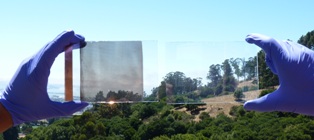
PARIS: Nanocrystal-based windows that selectively block different wavelengths of sunlight could help keep homes cool but still well lit — or warm but dark.
The technology has taken a major step toward commercialization because it blocks up to 90 percent of near-infrared and 80 percent of visible light, according to researchers at the University of Texas at Austin (UT Austin).
Controlled by voltage, the material takes minutes to switch between modes, an improvement over previous versions that took hours. And it could significantly reduce costs for heating and cooling buildings.
To optimize their windows for practical use, the researchers organized the two components of the composite material — vacancy-doped tungsten oxide nanocrystals and amorphous niobium oxide glass — to create a porous, interpenetrating network. The material is durable for at least 2000 cycles, the researchers said.
Now the team is working to produce a similarly structured nanocomposite by simple methods suitable for low-cost manufacturing.
The team also developed a single-component film made of doped titania nanocrystals that blocks visible or near-infrared light depending on voltage.
It would be most useful on a sunny winter day, when an occupant would want IR radiation to pass into a building for warmth, but glare from the sunlight would be reduced. The technology could also be used for dynamic optical filtering.

Related Stories

Tesla driverless system to use updated radar technology

byCT Report
12/09/2016

WASHINGTON: Electric carmaker Tesla announced Sunday it was upgrading its Autopilot software to use more advanced radar technology. In a...

Apple to develop its own self-driving technology

byCT Report
10/09/2016

SAN FRANCISCO: Apple may not become an automaker, but it still wants to develop its own self-driving technology. The iPhone-maker's...

NASA spots slowest known magnetar

byCT Report
10/09/2016

WASHINGTON: Astronomers have found evidence of a magnetar - magnetised neutron star - that spins much slower than the slowest...

‘YouTubers’ outshining old-school television

byCT Report
09/08/2016

SAN FRANCISCO: A media revolution is taking place, and most people over 35 years of age aren’t tuned in. Millennial...

Next Post

Pak rupee remains firm vs dollar

  • Terms and Conditions
  • Disclaimer

© 2011 Customs Today -World's first newspaper on customs. Customs Today.

No Result
View All Result
  • Transfers and Postings
  • Latest News
  • Karachi
  • Islamabad
  • Lahore
  • National
  • Chambers & Associations
  • Business
  • About Us

© 2011 Customs Today -World's first newspaper on customs. Customs Today.