Customs Today
  • Home
  • Islamabad
  • Karachi
  • Lahore
  • National
  • Transfers and Postings
  • Chambers & Associations
  • Business
No Result
View All Result
Customs Today
  • Home
  • Islamabad
  • Karachi
  • Lahore
  • National
  • Transfers and Postings
  • Chambers & Associations
  • Business
No Result
View All Result
Customs Today
No Result
View All Result
Home Science & Technology Science

NASA develop ‘chemical laptop’ which could help in search for alien life

bySana Anwar
20/11/2015
in Science, Science & Technology
Share on FacebookShare on Twitter

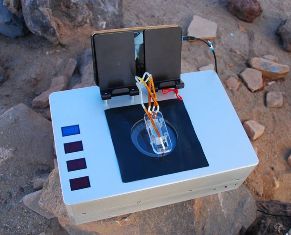
CANADA: Do you need a laptop? Well, forget about the MacBook and fix your gazes on the the National Aeronautics and Space Administration’s (NASA) portable life-form-signature detector, the Chemical Laptop.

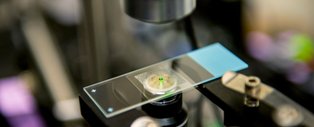
The Chemical Laptop is currently being developed at Jet Propulsion Laboratory (JPL) in Pasadena, California, which samples for materials associated with life. Researchers hope to one day send it to other planetary bodies in the Solar System, such as that of Mars and Europa, one of Jupiter’s moons.


You might also like

Tesla driverless system to use updated radar technology

12/09/2016

Apple to develop its own self-driving technology

10/09/2016

“If this instrument were to be sent to space, it would be the most sensitive device of its kind to leave Earth, and the first to be able to look for both amino acids and fatty acids,” says Jessica Creamer, a postdoctoral fellow from JPL.

NASA compares the contraption to a tricoder in “Star Trek.” However, unlike the sensor-scanning hand-held device that was popularized by the TV series, the Chemical Laptop is a miniaturized on-the-go laboratory that needs to ingest samples in order to analyze them. But while it looks like a laptop, it’s actually quite thicker for it needs to make space for the chemicals needed for analyses.

“Our device is a chemical analyzer that can be reprogrammed like a laptop to perform different functions,” elaborates Fernanda Mora, a JPL technologist who is part of the development team for the instrument. “As on a regular laptop, we have different apps for different analyses like amino acids and fatty acids.”

NASA explains that just like humans have two hands, there are two types of amino acids: left-handed and right-handed. Samples that are not of biological origins will also always register a 50-50 mixture between the two types of amino acids. However, if a sample registers something that is severely skewed toward either of the two types, such as life forms on Earth that use left-handed amino acids, then it would be a sign of life.


Related Stories

Tesla driverless system to use updated radar technology

byCT Report
12/09/2016

WASHINGTON: Electric carmaker Tesla announced Sunday it was upgrading its Autopilot software to use more advanced radar technology. In a...

Apple to develop its own self-driving technology

byCT Report
10/09/2016

SAN FRANCISCO: Apple may not become an automaker, but it still wants to develop its own self-driving technology. The iPhone-maker's...

NASA spots slowest known magnetar

byCT Report
10/09/2016

WASHINGTON: Astronomers have found evidence of a magnetar - magnetised neutron star - that spins much slower than the slowest...

‘YouTubers’ outshining old-school television

byCT Report
09/08/2016

SAN FRANCISCO: A media revolution is taking place, and most people over 35 years of age aren’t tuned in. Millennial...

Next Post

Scientists able to refrigerate water using infrared laser

  • Terms and Conditions
  • Disclaimer

© 2011 Customs Today -World's first newspaper on customs. Customs Today.

No Result
View All Result
  • Transfers and Postings
  • Latest News
  • Karachi
  • Islamabad
  • Lahore
  • National
  • Chambers & Associations
  • Business
  • About Us

© 2011 Customs Today -World's first newspaper on customs. Customs Today.