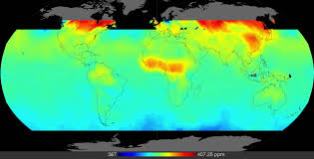
MEXICO: NASA recently released the first year’s data from the Orbiting Carbon Observatory-2 (OCO-2), which is designed to track levels of carbon dioxide (CO2) in the Earth’s atmosphere. The images show high levels of CO2 near the end of winter indicated by the red in the northern hemisphere. As spring arrives, the colors up north change to blues and greens as plants grow and absorb CO2, drawing it out of the atmosphere.
Carbon dioxide is a gas that’s released naturally through the breathing of plants and animals. It’s also released through human activities, such as the burning of fossil fuels and fires, and most climate scientists say it’s part of what is changing Earth’s climate


“We’re seeing rises in temperature both in the atmosphere, the land and the oceans. We’re seeing changes in sea level. We’re seeing melting ice both on the land and in the ocean, so all of those things add up to very complete picture,” says NASA scientist Dr. Lesley Ott. “We know that the main driver for all of these changes is CO2 that is being released into the atmosphere from human activities.”
Ott says plants in the ocean and on the land remove about 50 percent of the human emissions out of the atmosphere. Protecting the carbon stocks, which is the amount of carbon stored in the biomass, is crucial, and even small changes can help.
“We know that preserving those carbon stocks is really important,” says Ott. “So planting trees and preserving the trees you have that has a major impact, and that is something that everyone can do and look to do in your backyard.”