Customs Today
  • Home
  • Islamabad
  • Karachi
  • Lahore
  • National
  • Transfers and Postings
  • Chambers & Associations
  • Business
No Result
View All Result
Customs Today
  • Home
  • Islamabad
  • Karachi
  • Lahore
  • National
  • Transfers and Postings
  • Chambers & Associations
  • Business
No Result
View All Result
Customs Today
No Result
View All Result
Home Science & Technology Science

NASA spacecraft send back 1st colour image of Pluto after over 9yrs travel

byCustoms Today Report
20/04/2015
in Science, Science & Technology
Share on FacebookShare on Twitter

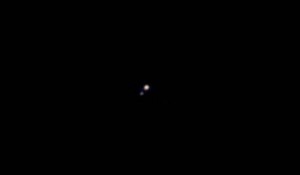
WASHINGTON:  NASA’s New Horizons spacecraft has sent back its first colour image of the dwarf planet Pluto and its largest moon Charon, after more than nine years of travelling through the solar system.

The new photo, taken on April 9 from a distance of about 115 million kilometres, is already providing insights about Pluto and Charon, as well as suggestions of the science to come when New Horizons flies by the Pluto system on July 14, NASA said.


You might also like

Tesla driverless system to use updated radar technology

12/09/2016

Apple to develop its own self-driving technology

10/09/2016

The image shows “tantalising glimpses of this system,” Jim Green, director of NASA’s Planetary Science Division, said.

“You can immediately see a number of differences between Pluto and Charon,” Green added.

Charon is dimmer than Pluto. The contrast may be due to a difference in composition of the two bodies, or it could even be caused by a previously unseen atmosphere on Charon, Green said.

The uncertainty should clear up this summer, when New Horizons gets history’s first good look at the two frigid, faraway objects, Space.com reported.

Pluto is getting its first close-up decades after planets such as Venus, Mars and Neptune received theirs. The delay means New Horizons is able to bring some pretty advanced scientific gear to the job.

New Horizons, which launched in January 2006, will be one of five spacecraft to visit the outer edges of the solar system, following in the footsteps of NASA’s Pioneer 10 and 11 and Voyager 1 and 2 probes.


 

Related Stories

Tesla driverless system to use updated radar technology

byCT Report
12/09/2016

WASHINGTON: Electric carmaker Tesla announced Sunday it was upgrading its Autopilot software to use more advanced radar technology. In a...

Apple to develop its own self-driving technology

byCT Report
10/09/2016

SAN FRANCISCO: Apple may not become an automaker, but it still wants to develop its own self-driving technology. The iPhone-maker's...

NASA spots slowest known magnetar

byCT Report
10/09/2016

WASHINGTON: Astronomers have found evidence of a magnetar - magnetised neutron star - that spins much slower than the slowest...

‘YouTubers’ outshining old-school television

byCT Report
09/08/2016

SAN FRANCISCO: A media revolution is taking place, and most people over 35 years of age aren’t tuned in. Millennial...

Next Post

Researchers highlight octopuses’ unique strategies to control their bodies, arms while crawling

  • Terms and Conditions
  • Disclaimer

© 2011 Customs Today -World's first newspaper on customs. Customs Today.

No Result
View All Result
  • Transfers and Postings
  • Latest News
  • Karachi
  • Islamabad
  • Lahore
  • National
  • Chambers & Associations
  • Business
  • About Us

© 2011 Customs Today -World's first newspaper on customs. Customs Today.