Customs Today
  • Home
  • Islamabad
  • Karachi
  • Lahore
  • National
  • Transfers and Postings
  • Chambers & Associations
  • Business
No Result
View All Result
Customs Today
  • Home
  • Islamabad
  • Karachi
  • Lahore
  • National
  • Transfers and Postings
  • Chambers & Associations
  • Business
No Result
View All Result
Customs Today
No Result
View All Result
Home Science & Technology Science

NASA study suggests carbon content of temperate forests overestimated

bySana Anwar
25/11/2015
in Science
Share on FacebookShare on Twitter

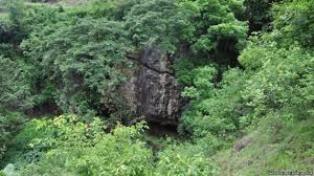
MEXICO: Digital measurements of millions of trees indicate that previous studies likely overestimate the amount of carbon stored by temperate U.S. forests, according to a new NASA study.

The findings could help scientists better understand the impact that trees have on the amount of carbon in the atmosphere. Although it is a well-established fact that trees absorb carbon and store it long-term, researchers are unsure how much is stored in global forests.
You might also like

Astronomers discover distant dwarf planet beyond Neptune

12/07/2016

Nasa’s Juno successfully begins orbit of Jupiter

05/07/2016

“Estimates of the carbon content of living trees typically rely on a method that is based on cutting down trees,” said Laura Duncanson, a postdoctoral fellow at NASA’s Goddard Space Flight Center in Greenbelt, Maryland. “It takes a lot of effort to cut down trees, particularly the biggest ones, so this just isn’t practical to do in large numbers.”


Because of this limitation, field studies aim to strategically sample trees. When looking at U.S. forests, for example, on average about 30 trees of each species would be cut down and measured. Researchers would then use basic mathematical models to scale up those measurements to many thousands, or even millions, of trees, resulting in an estimate of the biomass – the amount of carbon stored – for an entire forest.

In the paper, published on Nov. 24 in Scientific Reports, Duncanson and her co-investigators, Ralph Dubayah and Oliver Rourke, both from the University of Maryland, College Park, found that this widely used method tends to overestimate the height of large trees, leading to biomass figures that are much too high for temperate forests. This overestimation occurs because of a sampling bias: many more young, smaller trees get selected for analysis than older, larger trees. Because the mathematical models that predict tree biomass are mostly based on the smaller trees, the resulting models do not make accurate predictions for the largest trees.

Related Stories

Astronomers discover distant dwarf planet beyond Neptune

byCT Report
12/07/2016

LONDON: A dwarf planet half the size of Britain has been found tumbling through space in the most distant reaches...

Nasa’s Juno successfully begins orbit of Jupiter

byCT Report
05/07/2016

MIAMI: Nasa's unmanned Juno spacecraft has begun orbiting Jupiter, a key triumph for a $1.1 billion mission that aims to...

Coal dust kills 23,000 per year in European countries

byCT Report
05/07/2016

PARIS: Lung-penetrating dust from coal-fired power plants in the European Union claims some 23,000 lives a year and racks up...

Helium shortage could be solved by new life-saving discovery

byCT Report
28/06/2016

LONDON: Scientists might finally have overcome a global shortage of helium – potentially saving millions of lives in the process....

Next Post

How Earth’s pacific plates collpased?

  • Terms and Conditions
  • Disclaimer

© 2011 Customs Today -World's first newspaper on customs. Customs Today.

No Result
View All Result
  • Transfers and Postings
  • Latest News
  • Karachi
  • Islamabad
  • Lahore
  • National
  • Chambers & Associations
  • Business
  • About Us

© 2011 Customs Today -World's first newspaper on customs. Customs Today.