
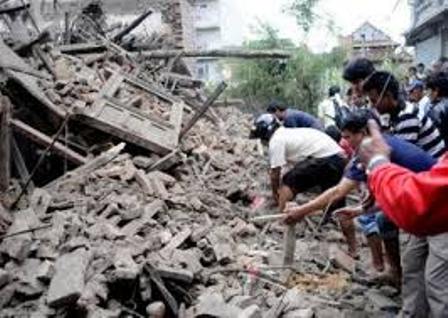


MEXICO: Four men were rescued from damaged buildings in Nepal with help from NASA technology that detects people’s heartbeats, officials said Friday.
A radar detector known as Finder, or Finding Individuals for Disaster and Emergency Response, was able to locate two survivors in a collapsed textile factory and two others in a different building in Chautara, a Nepalese town that has been devastated by the 7.8-magnitude earthquake that struck the nation April 25.
“I’m very gratified that it did its job — it’s the first time that Finder’s ever been used in an actual disaster situation,” James Lux, Finder’s task manager at NASA’s Jet Propulsion Laboratory, said in an interview. “You’ve done the best you can, you put it out there, and it worked.”
The suitcase-size device, which weighs less than 20 pounds, was able to discover victims who were trapped under roughly 10 feet of debris, including brick, mud and wood. The technology was the result of a collaboration between JPL and the Department of Homeland Security, and a version of it had been licensed to R4 Inc. of Edgewood, Md. The company’s president, David Lewis, arrived in Nepal on April 29 with two prototypes and joined a search-and-rescue effort.

Karachi Port sets 138-year cargo handling record
KARACHI: Pakistan's maritime sector has achieved a major milestone as Karachi Port set a new record in its 138-year history...


